

UNMISS peacekeepers reassure vulnerable Greater Mundri communities they are neither alone nor forgotten
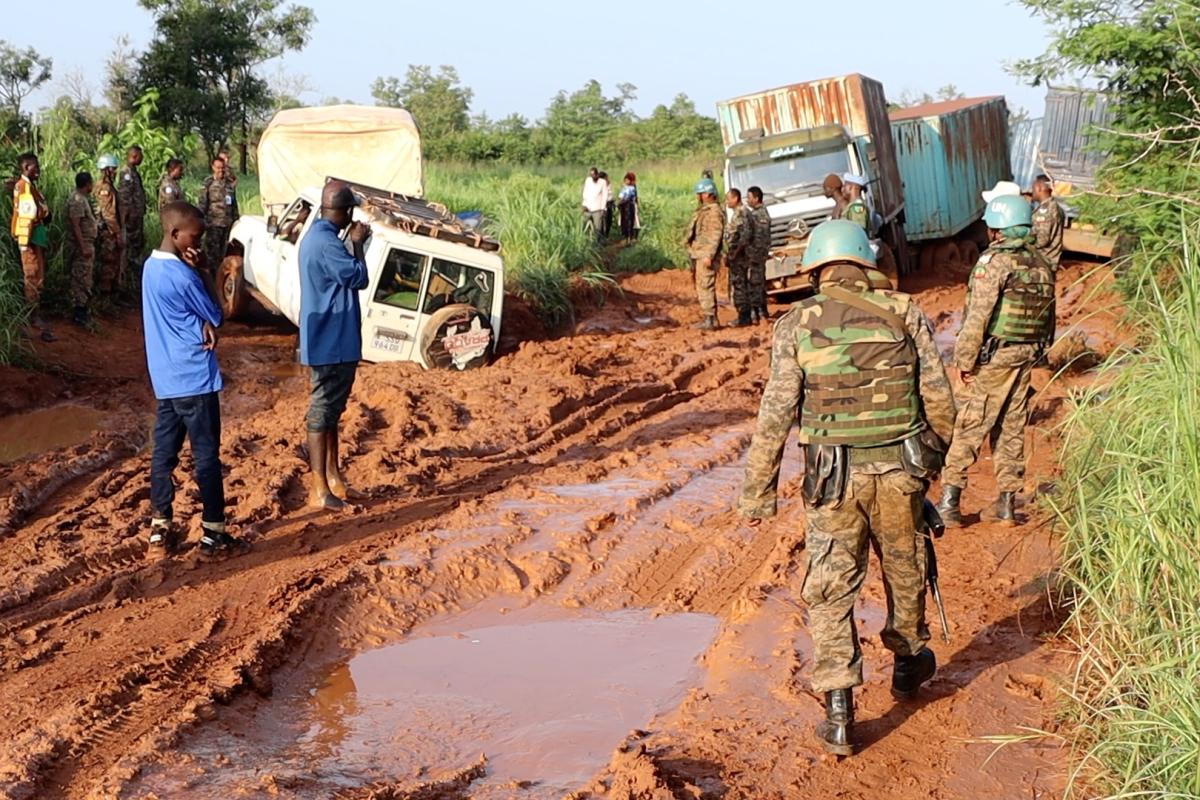
WESTERN EQUATORIA – In South Sudan, reaching families displaced by violence often begins with a treacherous journey.
In Western Equatoria, the only road linking Yambio to Greater Mundri becomes nearly impassable during the rainy season. For traders, humanitarians, local communities, and peacekeepers every journey is uncertain.
Yet this road remains a vital lifeline, connecting thousands of people to food, healthcare, and humanitarian assistance.
“We’ve suffered a lot on this road. We bring goods from Juba, and sometimes we spend four days on the road. Many of the items spoil before we arrive,” explains Buya Erenge, a local businesswoman.
The road condition determines whether food reaches markets, patients reach health facilities, and humanitarian aid reaches families in need.
“Most of the time, we are unable to reach many remote areas because of the road conditions, but we continue to do our best,” says Anthony Nwapa, Officer-in-Charge, UNMISS Yambio Field Office.
“The conflict between cattle herders and farmers, as well as the challenges facing internally displaced persons in these communities, are among the main reasons we continue reaching these areas to help address these problems.”
After hours on the road, peacekeepers serving with the United Nations Mission in South Sudan finally reach an area where thousands of people are displaced following cattle-related conflict.
For Florence John, each day begins with the same question: how will she feed her seven children? Widowed and displaced three months ago, survival has become a daily struggle. The wild fruits that once helped keep her family alive have disappeared. Now hunger and illness have replaced the sound of gunfire.
“Fear forced us to come here. We have now spent three months in this place. We have no food and no medicine. We are suffering from hunger. We used to survive on wild fruits, but there are no more left in the forest. Our children are now falling sick,” she says.
For Awadia Munir, escaping the violence was only the beginning. Displacement has left her family, not only without food, but also the opportunity to rebuild their lives.
“The cattle keepers came and started shooting until they reached my house. We have nothing to support our children or ourselves. If we become sick, there is no medicine. We rely only on traditional herbs. We lost all our cassava. Even the newly planted crops were uprooted, and the mature ones were eaten by cattle. Nothing is left. Now we are scattered in different places without food.”
For some families, home is no longer a place—it is a painful memory.
“My husband’s brother was killed in our home. It is difficult for us to return. We remain here, struggling to survive. Sometimes I ask members of the host community for green leaves so I can feed my children,” explains displaced mother, Rose Khemsa.
Beyond assessing humanitarian needs, peacekeepers are working with local authorities and communities to prevent further violence and support peaceful coexistence.
“Our primary objective is to prevent localized conflict from escalating into something much larger. We work closely with the government and local communities to promote dialogue because peace is essential for development and lasting progress,” says Anthony Nwapa.
The road out of Greater Mundri is as difficult as the road in. For thousands of displaced families, the greatest challenge is rebuilding lives shattered by violence.
But for the Blue Helmets, reaching these vulnerable communities is essential to reassuring them they are neither alone nor forgotten.
—
By Denis Louro