

Guinea and Sierra Leone: Eternal border conflict between Mamadi Doumbouya and Julius Maada Bio
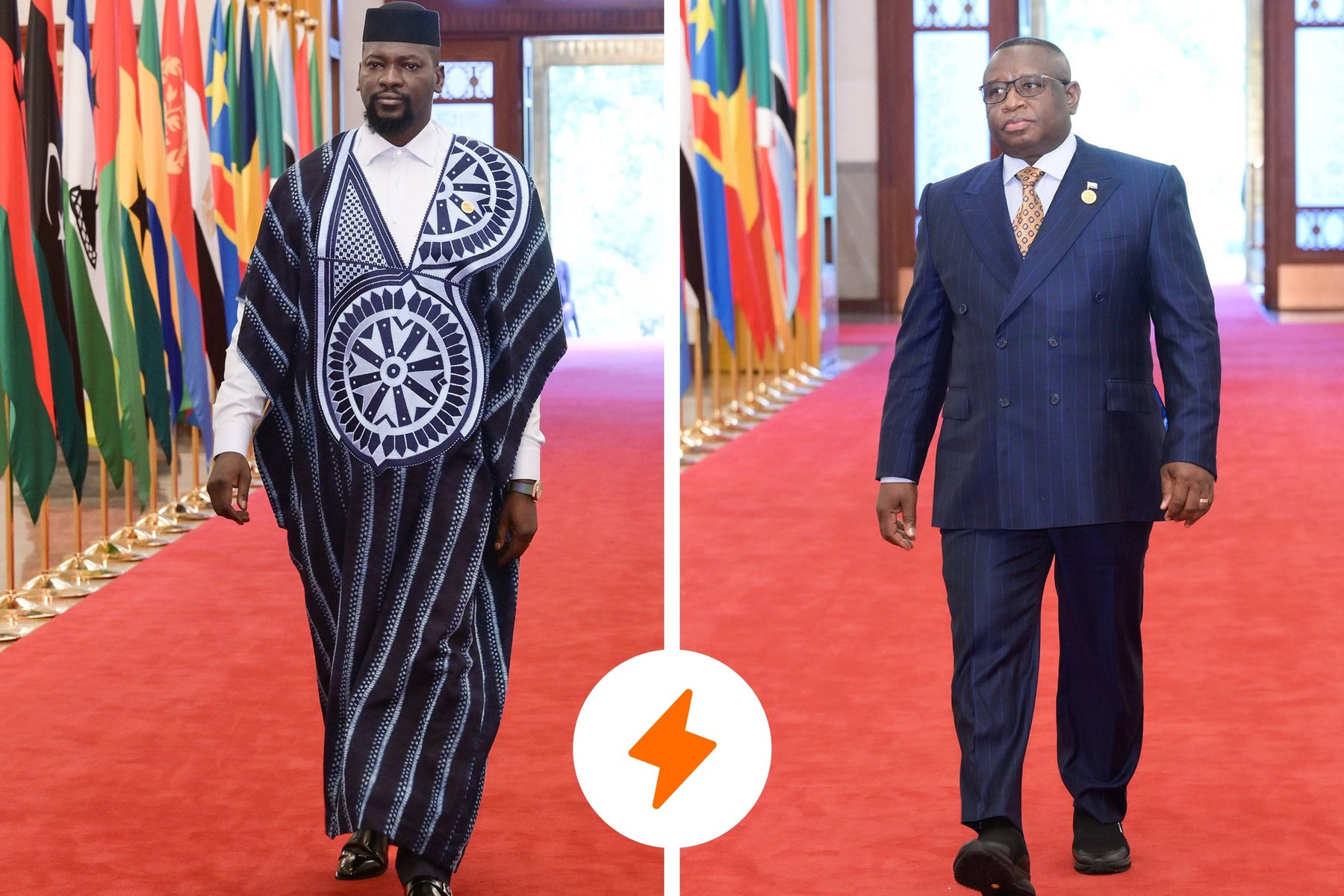
On 23 February, Guinean and Sierra Leonean soldiers clashed once again on their shared border. Both countries are familiar with this type of incident, which is highly frequent in the area and reignites tensions between the two presidents.
Admittedly, Guinea and Sierra Leone are not in open conflict. But even the warm handshakes exchanged by Julius Maada Bio and Mamadi Doumbouya at the latter’s inauguration on 17 January 2026 are no longer enough to conceal diplomatic incidents. A month after the two heads of state met in Conakry, their armies clashed at the border amid mutual accusations of incursions into their respective territories.
There is often a problem on the ground with mapping the borders resulting from colonisation
This border conflict, which predates the arrival of both leaders in power, has its roots in the boundaries inherited from colonisation and made intangible in 1964. “There is often a problem on the ground with mapping the borders resulting from colonisation,” says Faya Moïse Sandouno, a lecturer and researcher at the Université Général-Lansana-Conté de Sonfonia (Conakry) and a specialist in West African border issues. “It is sometimes very complicated to know where the boundary begins and ends.”
Diamonds and gold in Yenga?
A Franco-British agreement, signed in 1895, demarcates the route at Faranah (central-eastern Guinea) and Falaba (northern Sierra Leone), down to the west coast and the Atlantic Ocean. The other boundary, in the east, dates from 1912 and runs from the source of the Niger river to the tri-border area (Guinea, Sierra Leone, Liberia). Until now, it was in this area, known as Yenga and located in the Guéckédou prefecture on the Guinean side, that disputes were recurrent.
On 11 March, warning shots were heard in the vicinity. This time, it involved the Guinean and Liberian armies, who mutually accused each other of illegal incursions. At the heart of the dispute is a sand mining site located near the Makona river and claimed by both neighbouring countries. In a statement released on 12 March, the Economic Community of West African States (ECOWAS) expressed “deep concern over the escalating tensions along the borders” between Guinea, Liberia and Sierra Leone.
The sub-regional organisation announced the deployment of a technical assessment mission on the ground, urging the states involved to prioritise diplomacy to resolve their differences. This is perhaps what the three countries are moving towards: a tripartite summit, bringing together presidents Doumbouya, Bio and Joseph Boakai, is to be held on 16 March in Conakry, the Guinean presidency announced.
According to Faya Moïse Sandouno, the stakes are also economic. “The Yenga area is believed to be rich in diamonds and gold. Did Guinea and Sierra Leone each carry out [geological] studies before attempting to take control of it?”
The borders of African countries are mere lines…
The fact remains that both neighbours claim ownership of the site. In a statement published on 24 February, Sierra Leonean authorities accused the Guinean army of having “crossed the border to enter the town of Kalieyereh, in the Sulima chiefdom, Falaba district [North]”, where Sierra Leonean soldiers and police were “deployed”. The general staff of the Guinean armed forces immediately responded saying “several dozen armed Sierra Leonean soldiers [had] entered Guinean territory without authorisation”.
According to a Guinean administrative source, a foreign presence was reported to local authorities on 22 February. The local administrator (Faranah region) was the first to visit the scene, where the Sierra Leonean army visibly wanted to establish a base.
The mayor, who was also present, reportedly faced threats and narrowly avoided being taken hostage. According to a military source, the Guinean border is monitored by the Rapid Intervention Forces Group (GFIR), created in December 2021 from the ashes of the short-lived Rapid Intervention Group (GIR) set up by Alpha Condé shortly before his fall.
Guinea Coup – the Fall of Alpha Condé
The Guinean army arrested 16 Sierra Leonean soldiers. They were initially detained at the Faranah civil prison. “The next day, they were transferred to Conakry. Now, it is a state-to-state affair,” the aforementioned administrative source said at the time. These men were finally released on 27 February, following negotiations led by the Guinean prime minister, Amadou Oury Bah, in the presence of the foreign ministers of both countries.
A ‘major political issue in Sierra Leone’
The two governments plan to create a joint and permanent commission to examine border issues and prevent potential incidents. Rare at the Faranah level, these are, conversely, frequent in Guéckédou. The first, in the village of Yenga, Nongoa sub-prefecture (Kailahun, on the Sierra Leonean side), broke out in 1974, and was resolved by the presidents at the time, Sékou Touré and Siaka Stevens.
It was, however, rekindled by the civil war in Liberia and by rebel offensives against Guinea in 2000. “Nongoa, a strategic point where a river separates Guinea and Sierra Leone, served as a crossing point for rebels coming to carry out attacks. It is also an area rich in diamonds. In this context of war, the RUF [Revolutionary United Front] occupied the entire area and began mining [the mineral].”
“After verification, it was realised that the Makona river did not mark the boundary, as was represented in the popular imagination, and that the border was actually located 800 metres from the right bank, which corresponds to Yenga, in Guinean territory. The army set up its base just outside the village, which was perceived by Sierra Leonean public opinion as an attempted occupation,” says Sandouno.
“The border issue is a major political subject in Sierra Leone, especially during election periods,” says a former Guinean minister. “The borders of African countries are mere lines. They are a source of problems, especially between neighbours formerly colonised by different countries. In the south, the Kissi people were divided. In the north, the Coniagui live on both sides [Guinea and Senegal]; the Badiaranké, on three sides [Guinea, Senegal and Guinea-Bissau]. These are artificial borders,” says Alpha Amadou Bano Barry, a sociologist and author of the book Act for Guinea.
In December 2024, operations to dismantle hideouts of bandits and users of kush, notably in artisanal fishing ports in Conakry, led to the expulsion of about a hundred Sierra Leoneans. Freetown had threatened to deport Guinean nationals in return. The border is therefore not the sole source of tension between the two countries.
Credit: Source link
Comments are closed.