

Controversy in the United States over schedules for World Cup semifinals and final
The United States may no longer have a team left in the 2026 World Cup, but it certainly hasn’t lost interest in the tournament. Instead, many American fans have turned their attention to a different issue, with frustration over FIFA’s scheduling continuing to grow ahead of the final week of the competition.
The USMNT’s 4-1 defeat to Belgium in the Round of 16 ended hopes of the country’s deepest World Cup run since 2002, yet television audiences suggest enthusiasm has barely faded.
Argentina and England fans clash before World Cup semifinals showdown
England‘s quarter-final victory over Norway drew close to 20 million viewers in the United States, while Argentina‘s win over Switzerland attracted almost 16 million, underlining how strongly the tournament has connected with American audiences.
Those numbers have only strengthened the argument from supporters who believe the host nation should have received more consideration when FIFA set the kick-off times for the tournament’s biggest matches.
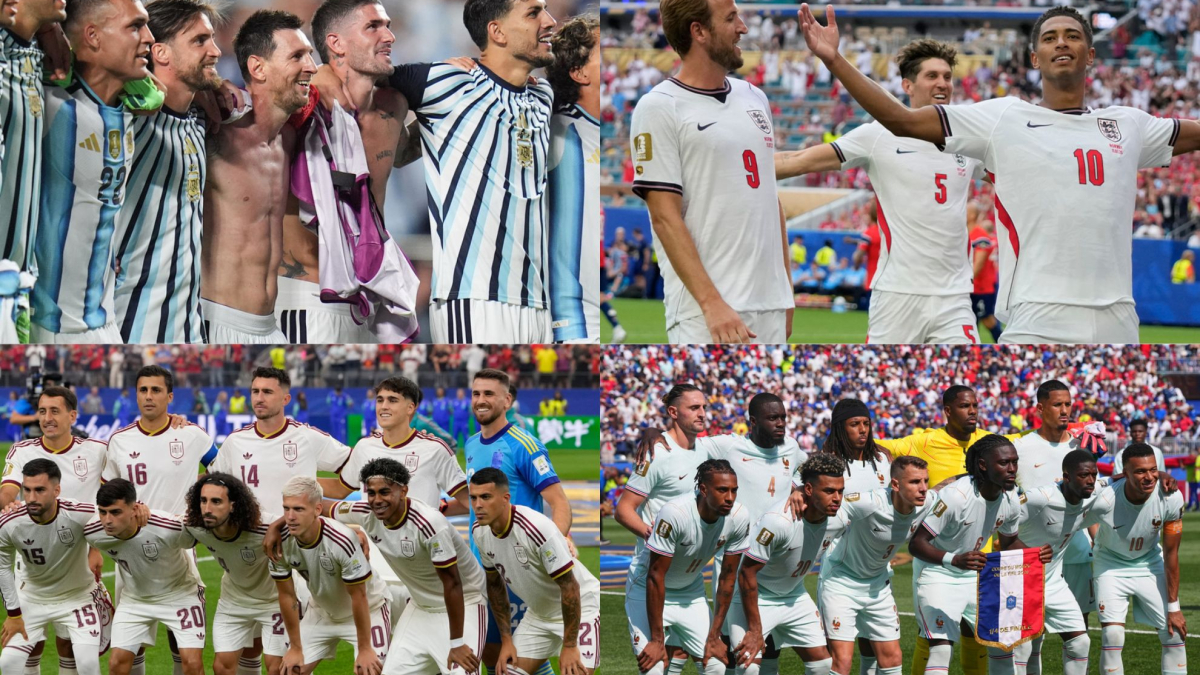
With France facing Spain in Dallas before England meet Argentina in Atlanta, both semi-finals will kick off at 3 p.m. ET on weekdays, leaving many supporters unable to watch live because of work commitments. Fans have not hidden their disappointment.
“Host nations, that literally paid billions to host, should get consideration above them for kickoff times,” one supporter wrote on social media.
Another described the scheduling as “a joke,” adding: “This is a HUGE semifinal. When you host, the marquee games go in your prime time. That is how the Olympics work, that is how past World Cups have worked.
“The host market gets the showcase window. North America is hosting and got skipped for a weekday matinee. What is even the point of hosting?”
U.S. viewers question FIFA’s priorities
Although Sunday’s World Cup final at MetLife Stadium is scheduled for 3 p.m. ET, a more manageable time for many viewers, some fans still believe FIFA missed an opportunity to maximize interest in the American market throughout the closing stages of the tournament.
“It’s dumb from an American viewer perspective,” one fan wrote. Another added simply: “Hottest time possible.” Questions have also been raised about the decision to stage the final outdoors in New Jersey during the middle of a July afternoon.
“The thing I don’t get is why do they pick MetLife if they’re going to be playing mid day in the middle of freaking July. Why not just play it at SoFi?! Is 20mil that important? Their cut would only be like 6mil right?” another supporter posted.
Not everyone agrees with the criticism, however. Some fans have defended FIFA’s approach, arguing that with England, France and Spain all reaching the semi-finals, evening television audiences across Europe inevitably became a major consideration.
FIFA explains why schedule won’t change
FIFA has made clear that the timings weren’t chosen lightly.
Manolo Zubiria, the World Cup’s chief tournament officer for the United States, said the governing body considered several factors before finalizing the schedule.
“We’ve tried to basically strike the right balance,” Zubiria said. He explained that FIFA looked at “the weather on site and the time back home in participating teams’ countries, to the recovery and potential travel facing players and fans.”
Zubiria also acknowledged the importance of worldwide audiences, adding: “The more people you can bring to this game around the world, the better.”
Those comments are unlikely to satisfy American supporters who believe the host nation deserved a greater say over the showcase kick-off windows.
Even after the USMNT’s elimination, the World Cup continues to deliver massive audiences across the United States.
That sustained interest has only intensified calls for FIFA to rethink how it balances global television demands with the expectations of the country staging the tournament.
Crédito: Link de origem