

Morocco’s onion imports surge to record levels • EastFruit
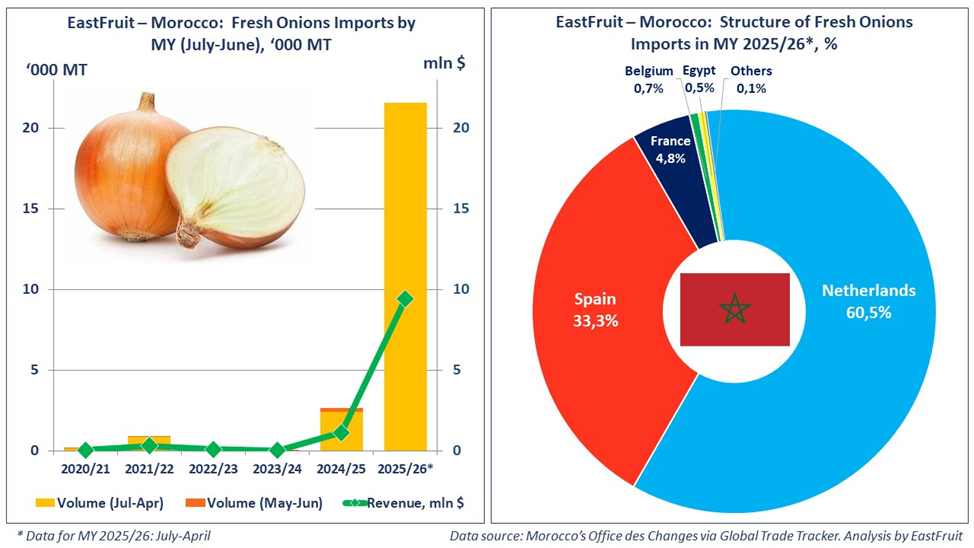
Morocco has witnessed an extraordinary spike in onion imports this season, marking a sharp reversal in its traditional role as a major supplier to West Africa, according to EastFruit. Between July 2025 and April 2026, the country imported 21,600 tons of fresh onions valued at USD 9.4 million. This figure is eight times higher than last season’s already elevated imports and 2.5 times greater than the previous record set in 2015/16.
The surge began modestly in January, with imports of around 500 tons, but escalated dramatically in April when volumes exceeded 14,500 tons in a single month. The Netherlands dominated supply, accounting for more than 60% of shipments, while Spain contributed roughly one‑third and France nearly 5%. Smaller consignments also arrived from Belgium and Egypt.
 Traditionally, Morocco has been a net exporter of onions, supplying large volumes to West African markets. This season, however, exports collapsed to just 2,700 tons between January and April – 7.7 times less than imports during the same period – effectively turning Morocco into a net importer. Although similar imbalances have occurred in past years, the scale of this season’s deficit is unprecedented.
The crisis reflects a combination of climatic and economic pressures. Adverse weather disrupted harvests in key production zones such as Tamehdit, Fès, and Meknès, reducing yields and quality. Despite falling output, some high‑quality onions continued to be exported to West Africa, quickly depleting domestic stocks. Weak storage infrastructure compounded the problem, as limited cold‑chain facilities and high post‑harvest losses prevented Morocco from building reserves for the latter half of the season.
As supply tightened, wholesale and retail prices soared to historic highs. Imports became the only viable mechanism to stabilize the market, with European suppliers offering consistent volumes, competitive prices, and reliable logistics.
This prolonged shortage illustrates how quickly local disruptions can reshape global trade flows. What began as a seasonal gap has evolved into a structural imbalance, forcing Morocco to rely on imports at record levels. If current trends persist, the import window may cease to be a temporary measure and instead become a permanent feature of Morocco’s market strategy, reshaping demand, pricing, and long‑term planning.
The onion crisis comes alongside other challenges in Morocco’s horticultural sector, including the collapse of fresh strawberry exports to record lows, underscoring the volatility and transformation underway in the country’s fruit and vegetable trade.
The use of the site materials is free if there is a direct and open for search engines hyperlink to a specific publication of the East-Fruit.com website.
Credit: Source link