

The Horn Of Africa States: Banking Systems Behind The Curve But Not Behind The Times – OpEd
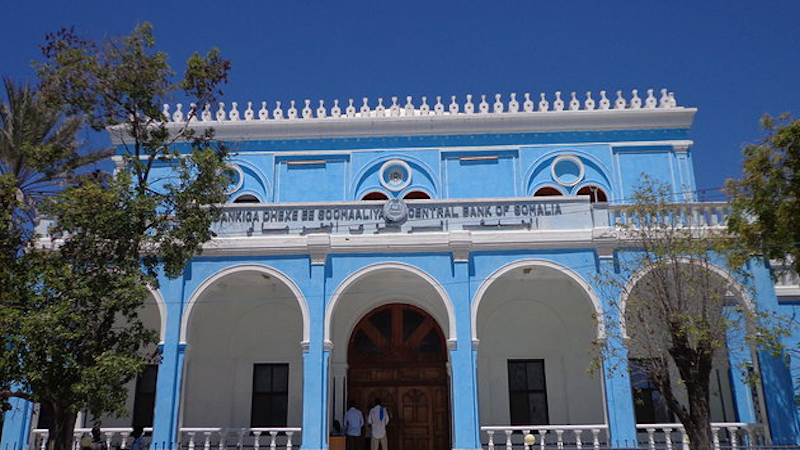
Key Takeaways:
- Banking lags behind economic growth in the Horn of Africa: Despite rising trade, remittances, ports, digital payments, and a young entrepreneurial population, traditional banks remain weak or absent, with economies advancing through informal, remittance, and mobile money systems instead.
- Different countries show similar outcomes: Somalia thrives on dollarization and mobile money with minimal formal banking; Ethiopia and Eritrea maintain tight state control that limits innovation; Djibouti has stronger banks tied mainly to trade rather than broad inclusion.
- Risk of irrelevance for banks: As economies mature, informal finance is becoming insufficient for larger investments and diversification; the region’s future depends on whether banks and governments can build trust, institutions, and digital integration before growth hits serious financial bottlenecks.
Across the Horn of Africa States region, cranes dot city skylines, ports handle increasing volumes of cargo, mobile phones have become wallets, and a young population is building businesses at a pace unimaginable a generation ago. But one institution, the banking system, appears conspicuously absent from this economic transformation.
Economists generally view banks as the engine of development. They mobilize savings, allocate capital, finance investment and reduce the cost of doing business. In much of the region, however, the opposite has occurred. The economy has expanded first, while banks struggle to keep pace. This is not a story of banking failure. It is a story of economies that have become more sophisticated than the financial systems supporting them.
The region is often viewed through the prism of political instability and humanitarian crises. That perspective obscures an important economic reality. The region sits astride one of the world’s busiest maritime corridors, benefits from billions of dollars in annual remittances, both from its vast diaspora and the international community, possesses one of Africa’s youngest populations and is becoming increasingly integrated into continental trade. These are precisely the conditions under which banking systems should flourish. Instead, finance has found alternative routes.
In Somalia, commerce has evolved through private enterprise, remittance companies and digital payment platforms instead of traditional banking. Businesses routinely settle transactions in U.S. dollars, while mobile money has become the financial infrastructure for millions of people. The remarkable lesson is not that banks have failed, but that markets have found ways to function without banks and do not depend heavily upon them.
Elsewhere in the region, governments have adopted different approaches but reached similar outcomes. Ethiopia has historically maintained one of Africa’s most tightly controlled banking sectors, protecting domestic institutions while restricting foreign participation, mostly directed at population control in the place of economic development. The strategy has preserved stability but also limited competition and innovation.
Eritrea’s highly centralized economic model has similarly constrained financial development. Djibouti, benefiting from its strategic ports and international logistics, has built a stronger banking presence, though one closely tied to external trade than to broad domestic financial inclusion.
The consequence is a common regional paradox. Economic activity is expanding faster than financial intermediation. This matters because growth eventually reaches the limits of informal finance. Small businesses require working capital. Manufacturers require investment finance. Farmers require seasonal credit. Infrastructure requires long-term lending. As economies mature, informal networks and retained earnings become insufficient. Without deeper financial markets, investment slows, productivity weakens and economic diversification becomes more difficult. Inter-banking business has not even seen the light in the region, yet!
Governments often justify cautious banking reform on the grounds of financial stability. That concern is understandable. Weak regulation, poor supervision and rapid liberalization have contributed to banking crises in many developing economies. However, excessive caution carries its own risks. Restrictive foreign exchange policies, barriers to competition and regulatory uncertainty discourage investment precisely when expanding economies require greater access to capital.
Somalia illustrates another dimension of this dilemma. Widespread dollarization has delivered a degree of monetary stability that the domestic currency has struggled to provide. Businesses benefit from reduced exchange-rate risk and greater confidence in commercial transactions. But dollarization also limits the policy tools available to the central bank, reducing its ability to influence credit conditions or respond to economic shocks. Stability has been achieved, but at the expense of monetary flexibility, which literally does not exist!
The region’s greatest opportunity may not lie in traditional banking at all. Digital finance has already transformed financial inclusion more rapidly than traditional banks ever managed. Mobile payments have lowered transaction costs, broadened access to financial services and connected millions to the formal economy. The next phase is likely to involve the integration of digital platforms with commercial banking, allowing technology to extend savings, lending, insurance and investment products to previously underserved markets.
For policymakers, the challenge is less about building more banks than building stronger institutions. Banking depends fundamentally upon trust, trust in contracts, regulation, courts, supervision and currency. Where institutions remain weak, banks lend cautiously and investors hesitate. Where institutions improve, capital follows.
The Horn of Africa’s banking systems are, therefore, unlikely to fail. Their greater risk is irrelevance. If they cannot evolve quickly enough to meet the demands of increasingly dynamic economies, entrepreneurs will continue to rely on informal finance, digital platforms and external capital. Banking will remain a spectator to economic transformation instead of becoming its catalyst.
The region’s economies are already moving ahead. The question is whether their financial institutions, and the governments that oversee them, can keep pace. That answer will determine whether the Horn’s next decade is defined merely by growth or by sustainable economic transformation.

Credit: Source link