

Somalia’s Conflicts Are Fueling Hunger More Than Drought
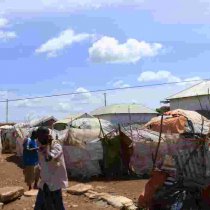
This year, as the Gu
planting season begins, reports from across Somalia indicate that insecurity is
preventing farmers from cultivating their land, despite the arrival of seasonal
rains. While drought has displaced hundreds of thousands of people from rural
areas, ongoing violence is denying them the opportunity to return home, rebuild
their livelihoods, and resume agricultural production.
Thousands of
internally displaced people (IDPs) living in camps in Mogadishu, Baidoa, and
other towns originally fled because of severe drought and livestock losses. Yet
their prospects of returning remain bleak due to persistent insecurity.
Humanitarian agencies continue to warn that displacement is becoming
increasingly protracted as conflict blocks durable solutions.
In Lower Shabelle,recurring clashes between two clans have severely disrupted farming activities.
The rival groups have reportedly destroyed irrigation canals that sustain
agricultural land, damaging infrastructure that is essential for crop
production. The fighting comes at a critical time when farmers would normally
be planting crops to benefit from seasonal rainfall after enduring prolonged
drought. Instead, agricultural recovery has been delayed, increasing the risk
of food shortages later in the year.
The Bay and Bakool
regions face multiple layers of insecurity. Besides the long-running conflict
between Al-Shabaab and government forces, armed groups aligned with former
South West State President Abdiaziz Laftagareen have launched repeated attacks
around Baidoa, creating further instability. The overlap of political violence
and insurgency has made farming, trade, and humanitarian access increasingly
difficult.
Al-Shabaab has also
intensified attacks against Somali government and allied forces. On 11 July,
the group reportedly attacked Ethiopian troops stationed at Wajid Airport in
Bakool while a military aircraft was unloading supplies. Earlier, on 9 July,
militants launched a heavy overnight assault on a Somali army base in the
Birbiraha area of Luuq district in Gedo region. Such attacks illustrate the
continuing volatility across southern Somalia and their impact on civilian life
and local economies.
In northern Somalia,
clan violence has also intensified. In Sanaag region, renewed fighting between
two clans in the Burkumaris area marked the latest outbreak in a long-running
dispute over land and resources. Despite previous mediation efforts, recurring
clashes continue to undermine local stability and livelihoods.
Meanwhile, Al-Shabaab
continues to conduct attacks in Lower Shabelle targeting government forces,
contributing to a climate of insecurity that discourages civilians from
returning to their farms or investing in agricultural production.
Taken together, these
developments demonstrate that conflict is now reinforcing—and in many cases
surpassing—the impact of drought. Although rainfall may provide favorable
conditions for cultivation, insecurity prevents communities from taking
advantage of improved weather. Instead of returning home, many displaced
families remain in camps, while others are newly displaced by violence.
The scale of Somalia’s humanitarian crisis
is reflected in recent warnings issued by the Food and Agriculture Organization
(FAO), the UN Office for the Coordination of Humanitarian Affairs (OCHA), the
UN Children’s Fund (UNICEF), and the World Food Programme (WFP). The agencies
estimate that between April and June 2026, nearly 6 million people—about 31
percent of Somalia’s population—will experience Crisis or worse levels of acute
food insecurity (IPC Phase 3 or higher). They also warn that Somalia is facing
one of the world’s most severe child malnutrition crises, with approximately
1.9 million children suffering from acute malnutrition. Of these, around
493,000 are expected to face severe acute malnutrition, a life-threatening
condition that leaves children up to 12 times more
Ultimately, Somalia’s
climate crisis cannot be viewed separately from its security crisis. Drought
and erratic rainfall continue to threaten livelihoods, but conflict has become
the principal factor preventing recovery. As long as civilians cannot safely
return to their farms, rehabilitate irrigation systems, or access their land,
improvements in rainfall alone will not translate into improved food
production.
Without sustained
security and political stability, humanitarian assistance will remain focused
on emergency relief rather than long-term recovery. The combination of armed
conflict, repeated displacement, and climate shocks risks trapping millions of
Somalis in chronic food insecurity, making conflict not merely a consequence of
humanitarian crisis but one of its primary drivers.
Credit: Source link