

Nothing to See Here… – Russian Life
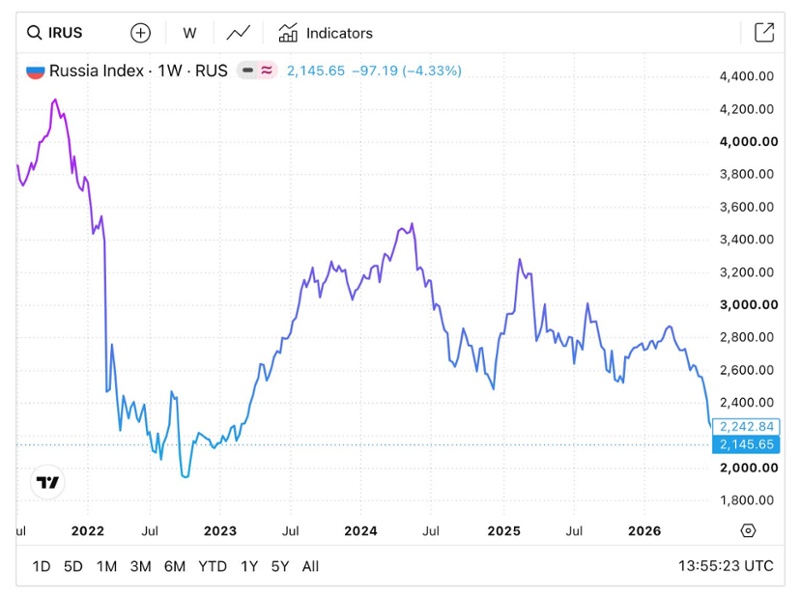
As reported in a recent article by The Bell, Russia’s stock market is in its longest losing streak since the Moscow Exchange index was created in 1997, falling for 17 straight weeks and losing nearly 23% of its value since the start of the year.
“On the day of [Russia’s] invasion [of Ukraine – February 22, 2022],” The Bell notes, “the index collapsed by 33 percent and closed at 2,085 points — by Bloomberg’s count, the third-largest single-day drop in the history of the world’s stock exchanges (only Argentina in 1990 and Kazakhstan in 2002 were worse).
A recent plunge left the index barely above the low it hit on the day Russia invaded Ukraine in February 2022 — meaning an investor who bought Russian stocks that day has earned almost nothing in more than four years.
The immediate trigger was the Central Bank’s decision in June to cut its key interest rate by only a quarter point, less than markets expected, seen as a sign the bank still views the economy as risky. That decision compounded existing pressures: falling oil prices, a stronger ruble squeezing exporters’ revenue, sanctions on Russian crude, the fuel crisis and a broader economic slowdown. The slide accelerated further after President Vladimir Putin said he saw no point in meeting Ukrainian President Volodymyr Zelensky, underscoring how closely investor sentiment tracks the war.
Kremlin officials have downplayed the rout as normal volatility and ruled out intervention. But dividend payouts are shrinking as high rates and falling commodity prices squeeze corporate profits, and retail investors who bought stocks earlier this year expecting a dividend rally have largely been burned. Bank deposits, state-guaranteed and paying 14-15% interest, remain far more attractive than equities; Russians hold roughly five times more money in deposits than in brokerage accounts. That money indirectly funds the war, since banks use deposits to buy government bonds covering a budget deficit driven partly by military spending. Putin’s 2024 order to double stock market capitalization by 2030 now looks out of reach, with capitalization falling rather than rising since then and one senior central banker calling the target “almost impossible.”
Separately, Russia’s fuel crisis is worsening. Ukrainian drone strikes have hit refineries supplying a large share of national output, including, for the first time this week, the country’s largest refinery, in Omsk. Gasoline production has fallen to roughly 65% of seasonal demand, forcing Russia to ban fuel exports and boost imports even as officials acknowledge shortages and long lines at gas stations. Sources close to the Kremlin told Reuters the strikes are only hardening Putin’s resolve to keep fighting, with one saying he believes Russia can still capture the remainder of Donetsk region. Moscow has responded with intensified missile strikes on Ukrainian cities, chiefly Kyiv.