

Somalia’s 2026 security impasse: The geography of an unwinnable war
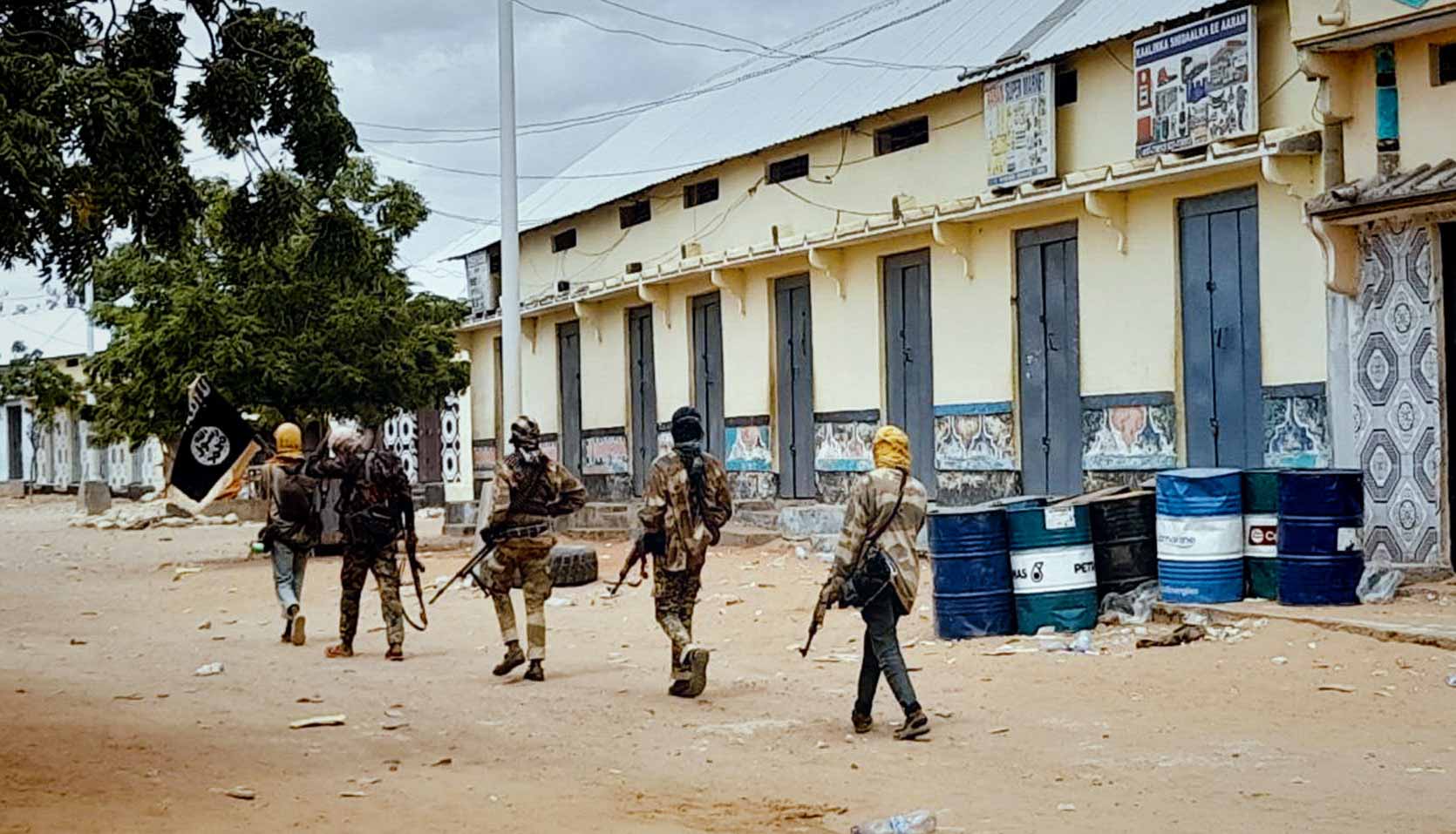
MOGADISHU (Somaliguardian) – The war between Somalia’s government and the militant group Al-Shabaab has settled once again into a prolonged and fragile stalemate, after years of advances and reversals that have repeatedly reshaped – but not resolved – the conflict.
According to a new Crisis Group report published this week, the current balance of power reflects a familiar pattern: neither the federal government nor Al-Shabaab is able to secure a decisive military advantage, leaving Somalia locked in an exhausting cycle of gains and losses that ultimately reset to near their starting point.
In 2022–2023, Somali federal forces, backed by allied clan militias known as macawisley and supported by international partners, seized large areas of central Somalia from Al-Shabaab, particularly in Hiraan and Middle Shabelle. The momentum raised expectations in Mogadishu that the insurgency might be on the verge of territorial collapse.
But that progress proved difficult to sustain. The government struggled to consolidate control over recaptured areas, facing shortages of trained personnel, weak coordination with federal member states, and difficulties integrating clan militias into a durable security structure. Many recruits left the army after training, while corruption and logistical failures further weakened operational capacity.
By 2024, political distractions – including disputes over constitutional changes, tensions with federal member states, and regional diplomatic crises – diverted attention from the battlefield. The offensive lost momentum.
Al-Shabaab, meanwhile, regrouped. After a period of recalibration, the group launched a major counteroffensive in early 2025, rapidly retaking most of Hiraan and Middle Shabelle regions. The gains largely erased the territorial losses it had suffered in earlier government campaigns, restoring a map of control similar to the pre-2022 situation.
Yet the group’s advance was not uniform. Its push toward Lower Shabelle, closer to Mogadishu, met stronger resistance from Somali forces supported by African Union troops and international airpower, including U.S. and Turkish assistance. That resistance ultimately slowed the offensive and prevented further expansion toward the capital.
By the second half of 2025, Al-Shabaab’s momentum had stalled. Both sides consolidated positions rather than pursue deeper offensives, producing what Crisis Group describes as a return to a long-standing “managed conflict” in which shifts in territory are temporary and reversible.
The report highlights that this instability is rooted in structural weaknesses on both sides. The Somali government lacks a fully reliable and sustainable military force capable of holding territory after it is seized. Efforts to expand the army and rely on clan-based mobilization have produced uneven results, with issues ranging from desertion and poor training to inconsistent political backing from federal member states.
The impending drawdown of the African Union peace operation further complicates Somalia’s security outlook. International partners remain essential to maintaining defensive lines, particularly around Mogadishu, but their long-term commitment is uncertain amid declining funding and shifting geopolitical priorities.
Al-Shabaab, for its part, has demonstrated adaptability rather than decisive strength. The group has reorganized its leadership, refined its intelligence capabilities, and adjusted its tactics to regain lost ground. It has also modified its governance approach in some areas, seeking to reduce local backlash by easing certain restrictions and engaging more with clan structures and humanitarian access – without abandoning its strict ideological control.
The result, the analysis concludes, is a conflict defined not by decisive breakthroughs but by cyclical reversals. Each side is capable of resisting the other, but neither has demonstrated the capacity to deliver a final defeat.
Looking ahead, Crisis Group warns that absent major reform, Somalia is likely to remain trapped in this equilibrium. The government would need to significantly strengthen its military institutions, improve coordination with regional authorities, and stabilize recruitment and funding systems to change the trajectory of the war.
At the same time, the report argues that military solutions alone are insufficient. Political fragmentation within Somalia’s federal system continues to undermine counterinsurgency efforts, while international support – though still significant – may not be enough to compensate for domestic divisions indefinitely.
Ultimately, the analysis concludes that the war is unlikely to be resolved on the battlefield alone. While neither side is close to collapse, neither is close to victory. In that balance lies the defining reality of Somalia’s conflict today: a stalemate that is both persistent and structurally reinforced, with no immediate end in sight.
Contact us: info@somaliguardian.com
Credit: Source link