

‘This is a decision that will cost people their lives’: Supreme Court clears way for detention, removal of Haitians | Local

The U.S. Supreme Court on Thursday, June 25, ruled in favor of the Trump administration and gave the federal government the green light to remove legal protections for more than 330,000 Haitian immigrants who reside in the United States, which includes an estimated 10,000 to 15,000 people who live in the Springfield area.
In a 6-3 decision, the high court sided with the Trump administration’s position that the secretary of the Department of Homeland Security Kristi Noem acted within her legal authority when she decided to cancel temporary protected status for Haiti last year. TPS allows Haitian immigrants to live and work in the United States, and loss of the designation would subject TPS holders to potential detention and deportation by immigration authorities.
Government attorneys argued that the TPS statute approved by Congress prohibits judicial review of the DHS secretary’s determinations. Attorneys for Haitian TPS holders alleged the secretary failed to follow legally required steps to cancel the designation and reached her decision based on discriminatory reasons and racial animus.
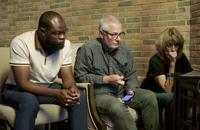
Viles Dorsainvil, left, president of the Haitian Community Help and Support Center, Carl Ruby, center, pastor and G92 leader, and Marjory Wentworth, G92 member, participate in a press conference at Central Christian Church on Thursday, June 25, 2026, in Springfield, about the US Supreme Court ruling to allow Trump administration to end TPS for Haitians and Syrians
In a statement, DHS General Counsel James Percival said, “In our second Supreme Court win of the day, the Court vindicates DHS yet again. The T in TPS stands for temporary, yet many of these designations became de facto amnesty. This is a win for the rule of law and common sense.”
Some Springfield faith leaders and community members reacted to the decision with shock and frustration.
“This is a decision that will cost people their lives,” said Springfield Pastor Carl Ruby. “This is not just a tragedy for Haitians — this is a tragedy for Springfield, Ohio.”
Ruby said many Haitians in the Springfield area are going to need immediate help with housing, food, legal fees and other essential costs because they are going to lose their work authorization, drivers’ licenses and other privileges.
SPRINGFIELD NEWS-SUN COVERAGE
Community impacted by end of TPS for Haitians

The U.S. Supreme Court has ruled in favor of the Trump administration and gave the federal government the green light to remove legal protections for more than 330,000 Haitian immigrants who reside in the United States, which includes an estimated 10,000 to 15,000 people who live in the Springfield area.
Here are some highlights of community perspectives and our reporting on this issue.
Vilès Dorsainvil, president of the Haitian Community Help and Support Center in Springfield, said Thursday was the saddest day of his life since he has lived in the United States.
“Springfield has been in the spotlight because of the president’s comments about us,” he said. “It is so sad to see the Supreme Court of the country just validate what the president of the free world did to our community.”
Dorsainvil said many local families are going to face major hardships because of this decision.
TPS holders from Haiti sued the Trump administration last year after Noem cancelled Haiti’s TPS designation. Foreign nationals from other countries also have sued the Trump administration for cancelling their TPS designations, and the Supreme Court ruling could impact those cases.
A federal district court judge in Washington, D.C., earlier this year blocked the federal government from immediately ending TPS for Haiti as litigation challenging the revocation proceeds. A federal appellate court upheld the stay order. The Trump administration asked the Supreme Court to weigh in, hoping the high court would reject the Haitian citizens’ legal claims and allow the TPS termination to take effect.
The TPS statute passed by Congress says that there is no judicial review of any of the DHS secretary’s determinations to designate, extend or terminate TPS for a foreign state.
The majority of the Supreme Court said that prohibits judicial review of all non-constitutional claims. The court said the Haitian TPS holders “offer no sound theories to overcome the plain meaning of the judicial-review bar.”
Geoffrey Pipoly, lead counsel for the Haitian plaintiffs, said Noem did not consult with “appropriate” government agencies before making her determination — as required by the TPS statute — and her decision was preordained and discriminatory. He said the secretary failed to follow the statutory process that is used to determine whether Haiti continues to meet the conditions of TPS designation.
The high court ruled that the judicial review bar applies to every decision that led up to the DHS secretary’s final determination. The court also concluded that Haitian TPS holders’ claims that the secretary’s termination was based on racial animus were unlikely to succeed.
Pipoly on Thursday said he was heartbroken by the court’s ruling. He said Haiti remains very unsafe and returning people to the Caribbean nation will put their lives in jeopardy.
“The Supreme Court decision means that many, many people are going to die violent, needless deaths,” he said. “I want to say I’m sorry and we did our best.”
Pipoly said the Supreme Court in essence concluded that Trump’s comments about Haitian people eating dogs and cats and his claims that they “all have AIDS” and that they come from a “shithole” country have nothing to do with racial discrimination.
Pipoly said his legal team will evaluate the court decision to determine next steps. Some legal observers believe the ruling will impact most legal challenges to DHS’ TPS terminations.
During oral argument in late April, the three liberal high court justices seemed receptive to the TPS holders’ procedural challenges, while the court’s conservative members sounded skeptical.


Rose-Thamar Joseph, operations director of Haitian Support Center
films in a press conference at Central Christian Church on Thursday, June 25, 2026, in Springfield, about the US Supreme Court ruling to allow Trump administration to end TPS for Haitians and Syrians.
Conservative Justice Samuel Alito said he did not know how TPS litigation could prevail if the court applied an ordinary meaning to the word “determination” or the ordinary meaning of a judicial review bar. Alito indicated he was concerned about the courts scrutinizing the level of consultation the secretary must complete.
“One of the points that (U.S. Solicitor General D. John Sauer) made was that if we accept your arguments, it will create a hole in the judicial review bar that you could drive a convoy of trucks through,” he said.
Sauer, who represented the Trump administration in court, said Congress did not want “judicial micromanagement” of foreign policy-related decisions about TPS determinations that are made by the political branches of government. He also said Noem cancelled Haiti’s TPS because she felt extending the country’s designation was contrary to the national interest.
But Justices Ketanji Brown Jackson and Sonia Sotomayor questioned Sauer about why the statute outlines procedural steps if they can be ignored and are not subject to review.
“So what was the point of Congress putting this statue into being and having requirements for the secretary if there was no ability for anyone to challenge the secretary’s compliance?” Justice Jackson asked.
Justice Sotomayor said, “What you are basically saying is Congress wrote a statute for no purpose.”
Jackson said the government’s argument seems to suggest that the DHS secretary could use an Ouija board or pull country names out of a hat to make TPS determinations — and no matter how he or she reached a decision, it could not be challenged. Jackson’s comments indicated that she feels there needs to be some oversight to ensure that procedural rules are followed.
Ruby, the pastor, said Springfield was on the decline before Haitian people started moving into the area. He said they helped recharge the economy and community.
He said he believes many major troubles lie ahead.
Staff writer Jessica Orozco contributed to this story.