

Haitian, Syrian immigrants scramble to stay in U.S. after court ruling
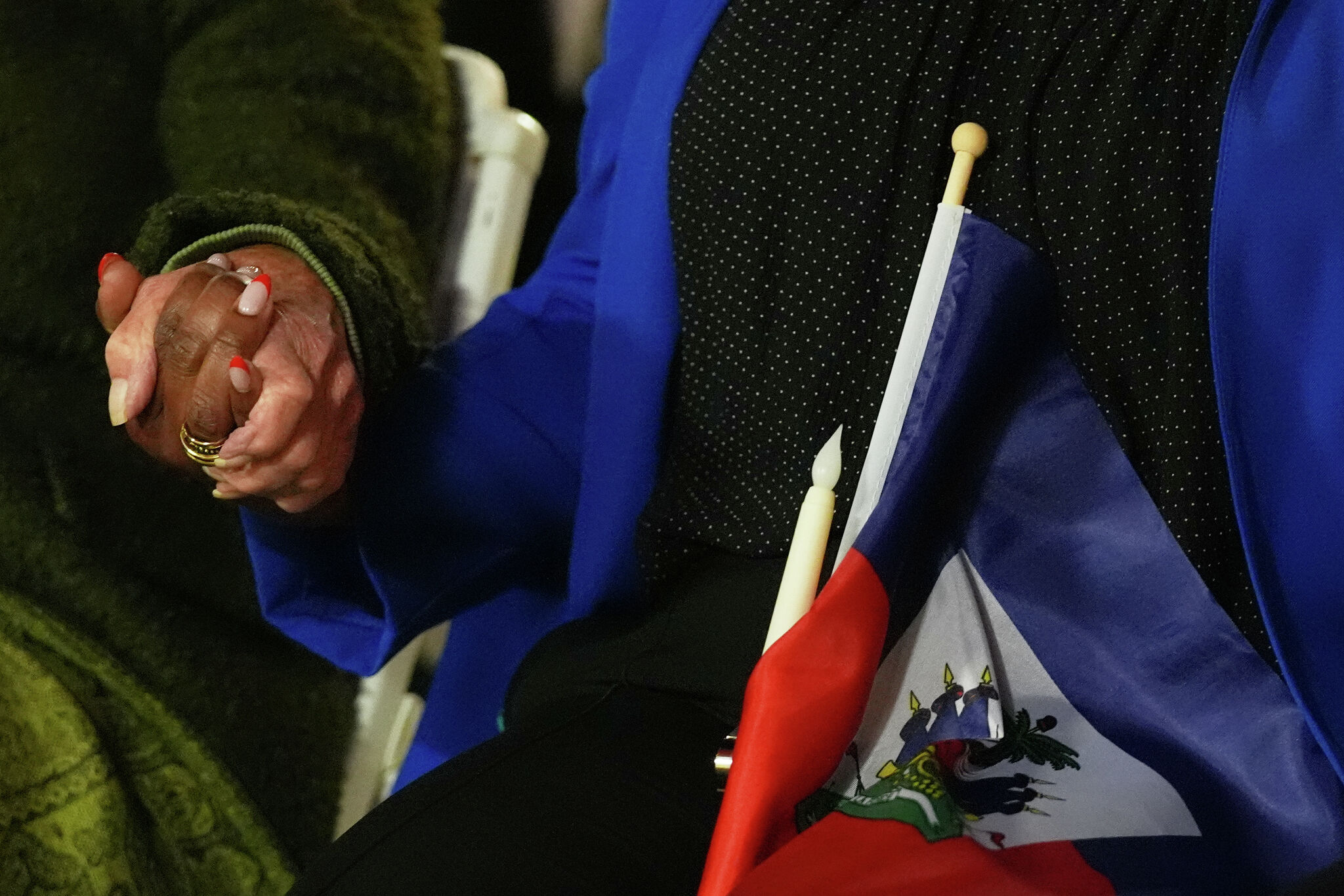

People hold hands and a Haitian flag during a vigil at the Little Haiti Cultural Complex after a federal judge blocked the Trump administration from ending temporary immigration status, or TPS, for Haitians, Feb. 3, 2026, in North Miami.
On Wednesday, Fritz Emmanuel Lesly Miot, an immigrant from Haiti, was in Atlanta yelling at the top of his lungs at the World Cup game between Haiti and Morocco. Seeing his community rally reminded him that, “we’re here, we matter, and we can still enjoy things.”
The next day, he found out the Supreme Court decided Thursday to allow the federal government to end temporary legal protections for Haitian and Syrian nationals, leaving them bracing for the loss of work permits, legal protections and the lives they built in the United States after.
“The rug gets pulled out from under your feet and now you’re stuck in this situation where the government is telling you, ‘we don’t want you,’” said Miot who has had the status for 15 years but now may be forced to return to a place he hasn’t stepped foot in since he was 9. “It’s a pattern of stolen joy.”
Article continues below this ad
In a sweeping 6-3 decision, the Supreme Court reversed lower court orders and allowed the federal government to move forward with ending the Temporary Protected Status for Syrian and Haitian immigrants, ruling that federal courts do not have jurisdiction to review termination decisions.
The ruling directly affects about 350,000 Haitians and 6,000 Syrians, exposing them to potential detention and deportation. It could also affect nearly a million people from 15 other countries on Temporary Protected Status, an immigration status that allows people to stay in the United States when their home countries are deemed too unsafe to return to.
The U.S. Census estimates there are about 1,200 Syrian-born people living in the Bay Area and about 1,100 Haitian-born residents, though those figures do not indicate how many have a protected status.
It remains unclear how soon deportations could begin. The U.S. District Court for the Southern District of New York and the District of Columbia are expected to issue new rulings that will allow protections for Syrian and Haitian immigrants to be formally revoked within the next month, said Emi MacLean, a senior staff attorney at the ACLU of Northern California and co-counsel for the Syrian case the Supreme Court ruled on. After that, immigrants will lose their right to work and will either need to find another path to legally stay in the U.S. or risk deportation.
Article continues below this ad
One of the lead plaintiffs in the case heard before the Supreme Court, Miot is a self-described “super introvert.” He’s been focused on his biophysics degree and his lab work in Loma Linda in Southern California, where he studies how aging and Alzheimer’s contributes to the deterioration of blood vessels in the brain.
Miot is not very political or heavily involved in the Haitian community — but hearing racist tropes about his people made him want to help the case for a status that allowed him to work in the U.S.
“I’ve literally never left the country since I came here,” Miot said. “I know absolutely next to nothing about what I would do in Haiti. It’s one of the things where I can’t begin to imagine what it would be like.”
Miot particularly fears that he may receive inadequate care for his diabetes in Haiti due to an insecure healthcare system. He’s also worried about gang violence.

Lesly Miot stands outside the U.S. Supreme Court. He was a lead plaintiff in a case heard before justices over temporary legal protections given to Haitian and Syrian immigrants.
The federal government granted Syrians temporary legal protections in 2012, after finding that human rights abuses under the Bashar al-Assad regime — including torture, arbitrary executions and the killing of protesters — made the country too dangerous for many people to return to, according to the Supreme Court ruling.
Article continues below this ad
Haitians became eligible for the protections in 2010 following a devastating earthquake that killed or injured hundreds of thousands of people. The designation was extended in later years as conditions worsened, including gang-related violence, human rights abuses, extreme poverty, inadequate health care and severe food insecurity.
The Trump Administration has defended the terminations by arguing the protections were meant to be short term and that conditions have improved in Syria and that certain areas of Haiti are safe again. Critics, including MacLean, have accused the administration of racism for ending the protections. Federal officials contend that they have terminated all temporary protective status designations as they have come up for review.
A Fox News reporter asked Department of Homeland Security General Counsel James Percival on Friday afternoon whether Haitians would be given a grace period to leave the country, or if arrests and deportations would begin immediately.
“It’s closing time, they don’t have to go home, but they can’t stay,” Percival told the reporter.
MacLean said the ruling could reach far beyond Haitian and Syrian immigrants, undercutting lawsuits brought by other groups whose temporary legal protections have been terminated or threatened. She said only four countries have not yet had protections revoked by the Trump administration: Ukraine, El Salvador, Sudan and Lebanon.
Article continues below this ad
Lower-court orders have temporarily blocked terminations for some others, including Ethiopia, Somalia and South Sudan, making those immigrants “obviously vulnerable” based on the Supreme Court decision, MacLean said.
“There are hundreds of thousands of people who are at risk of deportation because of this decision,” MacLean said. “The only way that that risk will not come to pass, and that people can be protected at this point… is if there is some political action, if Congress acts or if this administration provides a reprieve.”