

Ancient temple discoveries unearthed in Egypt’s Bahariya Oasis
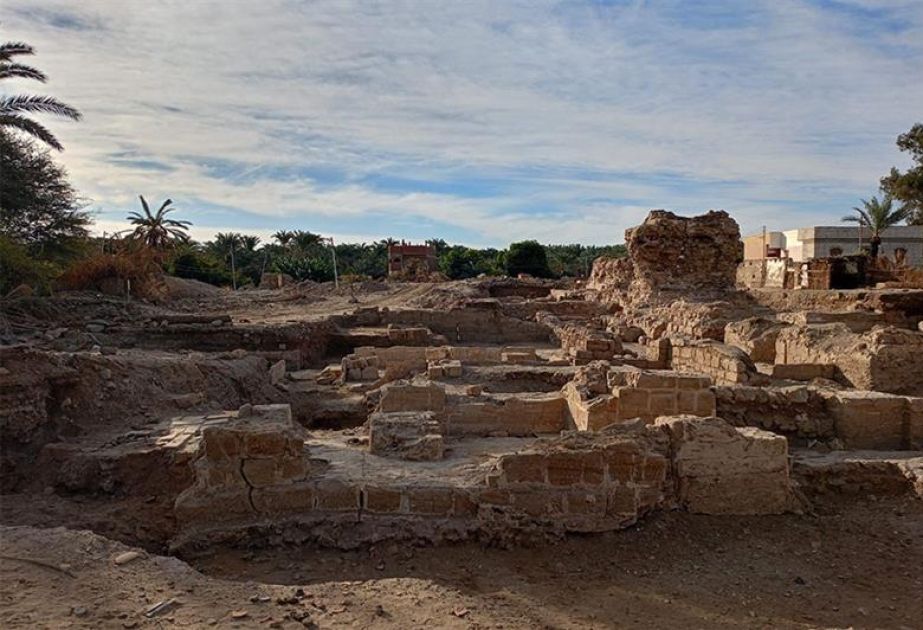
Egypt has announced a significant archaeological breakthrough at
the Al-Qasr Al-Qadim (Old Palace) Temple in the Bahariya Oasis,
located in the country’s Western Desert, AzerNEWS
reports.
According to the Egyptian Ministry of Tourism and Antiquities,
an archaeological team from the Supreme Council of Antiquities
(SCA) uncovered important structural remains and artifacts dating
back approximately 2,500 years to the 26th Dynasty (664–525
B.C.).
Among the discoveries are the remains of a sandstone chamber,
inscribed stone blocks bearing the names and royal titles of King
Psamtik I, and a collection of additional archaeological
objects.
Hisham Elleithy, Secretary-General of the SCA, said the findings
offer new insights into the historical and religious importance of
the site, reinforcing evidence that it served as a major
administrative center throughout different periods of ancient
Egyptian history.
Excavations also revealed the temple’s main hypostyle hall,
featuring 16 sandstone columns, along with adjoining rooms,
shrines, and hieroglyphic inscriptions dedicated to deities
including Amun-Ra, Amunet, and Khonsu.
According to Mohamed Abdel-Badie, head of the Egyptian
Antiquities Sector at the SCA, construction of the hall began
during the reign of King Psamtik I and was later completed under
Kings Wahibre (Apries) and Ahmose II (Amasis).
The mission further uncovered a stone stela dating to the reign
of King Amenhotep II of the 18th Dynasty, providing evidence of the
Bahariya Oasis’s connection to the Egyptian state since the New
Kingdom period. Archaeologists also found artifacts linked to the
era of King Ramesses II, indicating that religious and urban
activity existed at the site long before the 26th Dynasty.
Credit: Source link