Continental Postal Services of Hebland

Libya Draws Oil Majors Back in First Licensing Round in 17 Years
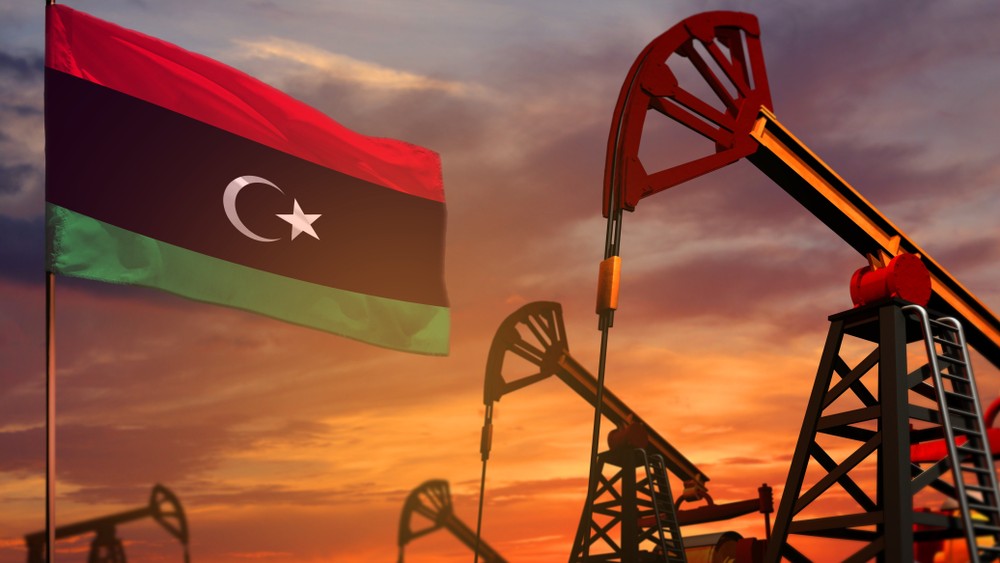
Libya is back on the radar of the world’s largest oil companies, and Washington is trying to turn a fragile military thaw into a new source of crude supply. Libya’s National Oil Corporation has formally signed exploration and production-sharing agreements from its 2025 bid round with international companies including Repsol, Turkish Petroleum, Eni, QatarEnergy, and MOL, marking the country’s first major licensing push in 17 years. In the meantime, Libya’s production has climbed to roughly 1.4 million bpd, its highest level in more than a decade, with officials targeting 1.6 million bpd by the end of this year, and 2 million bpd further out. 

Now that Iran is done and dusted, from Trump’s perspective, there’s time for Libya, which holds Africa’s largest proven oil reserves, light sweet crude close to European markets, and export terminals already tied into the Mediterranean routes. Its crude has also become more valuable amid all of these Gulf disruptions that have forced refiners to search for alternative supplies. Nigeria imported Libyan crude for the first time in May; Egypt resumed purchases of Libyan crude for the first time since 2019; and Tunisia has stepped up buying. Italy remains the top destination, followed by Greece, Spain, and Turkey.

Everyone is hoping that the band-aid on Libya’s political fragility holds. We are still dealing with a divided state here, and rival governments that currently have mutually beneficial setups that enrich both sides with…

Libya is back on the radar of the world’s largest oil companies, and Washington is trying to turn a fragile military thaw into a new source of crude supply. Libya’s National Oil Corporation has formally signed exploration and production-sharing agreements from its 2025 bid round with international companies including Repsol, Turkish Petroleum, Eni, QatarEnergy, and MOL, marking the country’s first major licensing push in 17 years. In the meantime, Libya’s production has climbed to roughly 1.4 million bpd, its highest level in more than a decade, with officials targeting 1.6 million bpd by the end of this year, and 2 million bpd further out. 

Now that Iran is done and dusted, from Trump’s perspective, there’s time for Libya, which holds Africa’s largest proven oil reserves, light sweet crude close to European markets, and export terminals already tied into the Mediterranean routes. Its crude has also become more valuable amid all of these Gulf disruptions that have forced refiners to search for alternative supplies. Nigeria imported Libyan crude for the first time in May; Egypt resumed purchases of Libyan crude for the first time since 2019; and Tunisia has stepped up buying. Italy remains the top destination, followed by Greece, Spain, and Turkey.

Everyone is hoping that the band-aid on Libya’s political fragility holds. We are still dealing with a divided state here, and rival governments that currently have mutually beneficial setups that enrich both sides with illicit activities to keep the peace. Output has repeatedly been shut down by factions using crude as leverage. A central bank dispute last year cut production sharply, while fighting in Zawiya recently forced the shutdown of the country’s biggest refinery. Even when exports rise, cash doesn’t automatically reach the state. Libya generated nearly $4 billion in oil revenue in May, but fuel-import costs, settlement deductions, central bank bottlenecks, and illicit diversions slowed the conversion of oil income into financial power. 

Washington is backing military cooperation between Libya’s eastern and western camps, including joint exercises under U.S. supervision near Sirte, the gateway to the country’s most important oil corridor. And Western majors are coming back to revive mature fields, open new acreage, and stabilize export flows. ConocoPhillips, Chevron, and ExxonMobil are already moving back in, while Eni, QatarEnergy, Repsol, and others are expanding positions through the new bid round.

Is it stable enough for the supermajors to hit the ground running? Yes, for now. 

In April, the rival power centers found a workable arrangement to push through Libya’s first unified budget framework in over a decade. The agreement created a mechanism for both sides to benefit from the same oil revenues without launching another civil war. 

In 2024, a dispute over control of the Central Bank (where oil revenues go) triggered production shutdowns that removed hundreds of thousands of barrels per day from the market. The new budget framework gives both camps a financial stake in keeping production flowing. So for the time being, continued cooperation now offers greater rewards than another costly confrontation. What investors here are banking on is that this arrangement will be longer-lasting because it’s in the financial interest of both Dbeibah and Haftar. Tripoli retains international recognition and formal control of state institutions, while Haftar continues consolidating authority across eastern and southern Libya. As long as oil revenues keep arriving and spending continues, neither side has a strong incentive to disrupt. It’s not a unification, but a coexistence. 

For Haftar, the arrangement is especially useful. He doesn’t need to seize Tripoli today.  

Since the April agreement, eastern Libya has become the site of one of the largest state-backed construction programs in the country. The Haftar-controlled Libya Development and Reconstruction Fund has reportedly received an initial allocation of 10 billion dinars and mobilized roughly $2.7 billion for projects across Benghazi, Derna, and other eastern cities. More than 20 foreign companies from Egypt, Turkey, Italy, France, the UAE, and Russia have secured contracts covering highways, bridges, housing developments, and public infrastructure.

This is all far more valuable than another military campaign. Oil revenues continue to flow through the national system while billions of dollars are redirected into projects controlled by institutions dominated by his family. His son, Belqasem, oversees the reconstruction fund. His son, Saddam, continues to consolidate military authority. 

On the part of major international oil companies, it’s a pragmatic hedge. It will hold for now. And the longer it holds, the more time Haftar has to build the east into a parallel state with its own army, budget networks, foreign patrons, and reconstruction economy.


Credit: Source link

Leave A Reply

Your email address will not be published.