

Win or lose against Portugal, Congo’s World Cup return pure catharsis
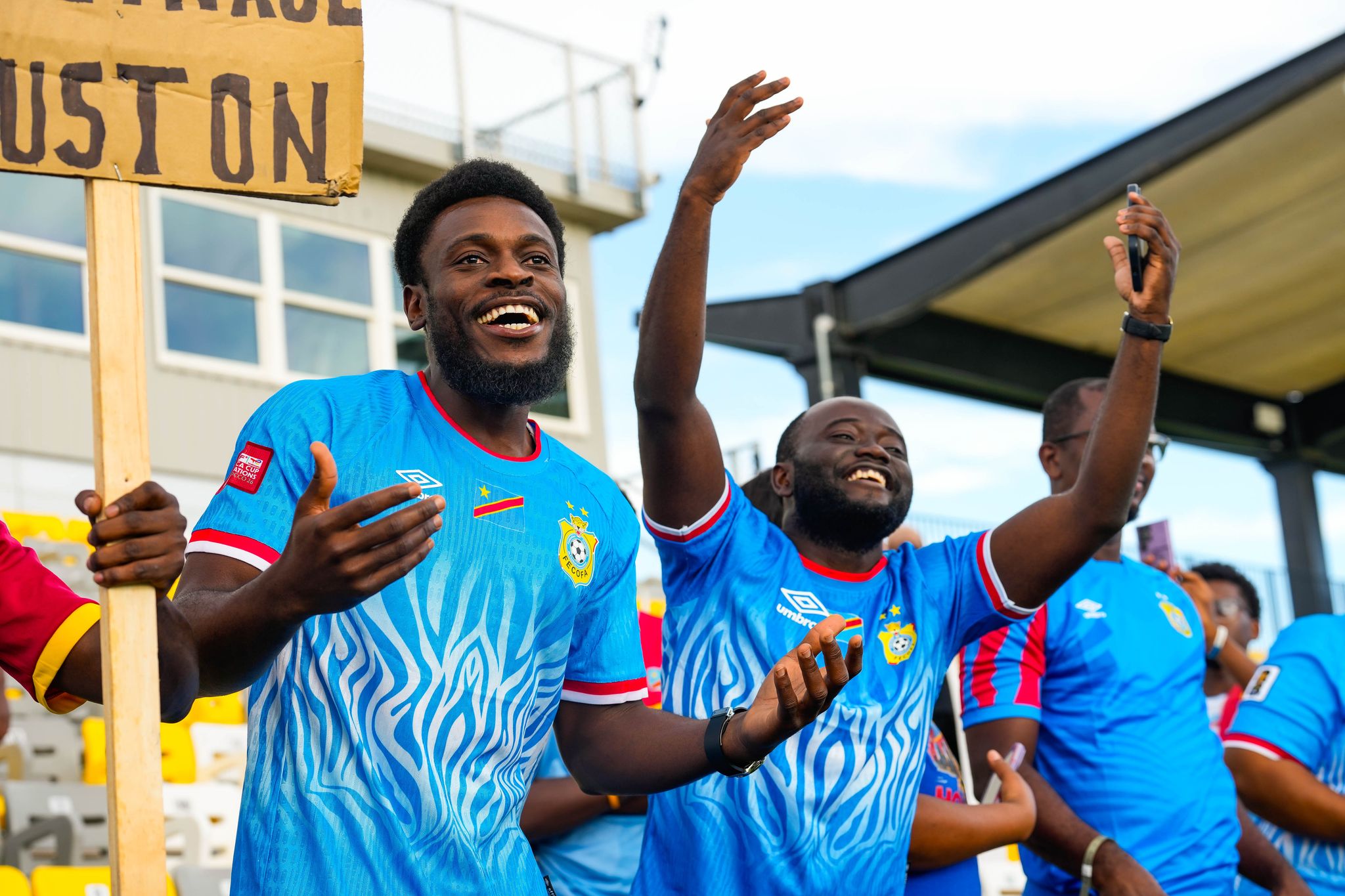

Fans watch the Democratic Republic of the Congo national soccer team during a community practice at SaberCats Stadium in Houston on Friday, June 12, 2026, ahead of the team’s FIFA World Cup match against Portugal.
Raquel Natalicchio/Houston ChronicleFrom the minute the Leopards touched down in George Bush Intercontinental Airport, it was clear the Democratic Republic of the Congo’s soccer team understood the assignment.
Wearing impeccably tailored suits with leopard-print sashes and matching travel bags, the young men marched, stone-faced, into a warm Houston welcome. It was a fitting (and viral) arrival for a nation that had waited half a century to participate in humanity’s largest sporting event.
The last time Congo reached that pinnacle, the World Wide Web was in its infancy and the country was still called Zaire. But now is a chance for the world to see — really, truly see — the country. Normally, when Western media bothers itself to pay any attention at all, the headlines are negative: about Ebola, about grinding poverty, about a devastating, decades-long conflict over resources in the East.
Article continues below this ad
But this is an opportunity for Congo to show itself proudly to the world.
“They came in like princes,” said Furah Kashemwa, a 50-year-old Congolese national who has lived in Houston since the ’90s and was one of several fans there to greet them. For Kashemwa, seeing her national team in her adopted country was overwhelming. The players’ seriousness didn’t surprise her. “It’s a huge responsibility to carry a nation,” she said. “They know they have to make us proud.”
I’m no sports analyst — or even much of a sports aficionado. But as a Mexican, I know what it’s like to come from a country where being a soccer fan isn’t so much a choice as it is a birthright.
Even if I don’t follow every match or know the name of every player, I can’t resist the energy — that thrumming force of conviction, despite the slimmest of odds, that blurs the line between fanaticism and good, clean patriotism. It’s not the kind that makes me want to wage war, exactly, but the kind that, no matter where I live, makes me want to throw back a shot of tequila and sing a teary rendition of “Cielito Lindo” shoulder to shoulder with a sea of green. The childlike fervor is the best part of this whole once-every-four-years ordeal.
Article continues below this ad
Yet nothing makes me more invested in sports than a good underdog story. And this — Congo versus Portugal — this is the ultimate underdog story. Whether or not Congo wins in the Wednesday match matters less than the simple fact that they are taking on a giant. That the country and its roaring diaspora show up, the way they always do: With fierce, inextinguishable joy and unshakeable pride.
On Monday, inside the GSH Event Center in southwest Houston where the Congolese government was hosting a days-long World Cup celebration, the stakes were laid out in biblical terms.
“We’re like David and Goliath,” Rev. Pie-René Ikota Ndjoli thundered in French from the stage. Sharply dressed men and women at dozens of tables broke into applause. Beaming kids waved sky-blue-yellow-and-red flags.
The world has taken much from Congo, one of the poorest, yet most resource-rich countries on Earth. Its minerals. Its land. Its people. Decades of deadly conflict over their resources have created one of the world’s most complex displacement crises, uprooting up to 9 million people by the end of this year. About 10,000 have made Houston their home.
“We have suffered a lot,” Ikota Ndjoli continued, urging his fellow Congolese to believe, the way a small child would, that the team would prevail anyway.
Article continues below this ad
He spoke to God then. “If Congo wins, you will heal the hearts of my brothers and sisters. The people that are suffering need that joy.”
What better place to get a taste of that Congolese joy than inside a Gujarati event center nestled in Brays Oaks, a majority Black and Hispanic neighborhood with a large Jewish Orthodox community, in one of the most diverse cities in the country?
Bienvenue Mbobile, an entertainer, First United Methodist Church music director and restaurant owner, is as warm and welcoming as his first name suggests. For him, there’s no better place than Houston to host this historic moment for his home country. When Mbobile, 54, first moved here in 2011, he felt like he was right back in his father’s village. “Houston is a kind of deep-river quiet,” he said, and a far cry from the chaos of Kinshasa, Congo’s capital. “This is where I belong.”
I had caught Mbobile minutes after an energetic performance in which he sang and danced to the catchy Lingala term: “Fimbu! Fimbu! Fimbu!” Literally meaning “whip,” the song is accompanied by a celebratory, tongue-in-cheek dance that mimics flagging your opponent — keep your eye out for it if (and when) Congo scores.
Music is part and parcel of what it means to be Congolese, Mbobile explained. It’s in the streets, the bars, the churches. In rural parts of the country, a particular percussive beat can tell a neighboring village that danger is near. Now, through TikTok and Instagram, songs with contagious rumba rhythms like “Bana Congo” and Congo’s unofficial World Cup song “Tobeta Bango” connect a diaspora desperate for unity, inspiring dance challenges that are as defiant as they are joyful and hip-dislocating.
Article continues below this ad
For Chris Ntumba, a 60-something-year-old with a booming belly laugh, what we’re seeing is an undeniable “explosion of excitement.” He traveled all the way from Washington, D.C., to Houston to showcase his collection of Congolese art. Wearing his blue jersey, he sat in the event hall surrounded by a vision of oranges, blues, reds and browns, of tribal women hand-hammered out of copper and village scenes painted on sand.
“The country has been going through very difficult times for so long, so this thing here is like…” he paused, searching for the right word, “catharsis!” He drew out the s and rolled his r, French and guttural.
It certainly felt that way, watching the corporate event space fill with the booming beats of “Tobeta Bango” (arguably the best song to come out of this tournament). First the kids sprang to their feet, bouncing and giggling. Then came the dreaded vuvuzela, the bee-swarm clarion call banned by FIFA in stadiums. Then, slowly, tentatively, the men in suits stiffly rose, their hips swaying, almost of their own accord, like muscle memory.
The rain had poured down in sheets that day, and the possibility of a life-threatening flood had threatened to derail the event altogether. But as I left the event center, the sky broke into a brilliant sunset the colors of Congo’s flag. Seeing the baby-blue streaked with red and yellow, I couldn’t help but believe, the way a child might, that it was a sign the country would prevail. That brighter things were coming, no matter the score when that final whistle blows.
Article continues below this ad
Regina Lankenau is an editorial writer, columnist and a member of the Houston Chronicle editorial board. She can be reached at regina.lankenau@houstonchronicle.com.
Credit: Source link
Comments are closed.