

Concerns about Gulf developments affecting Sudan’s building materials markets
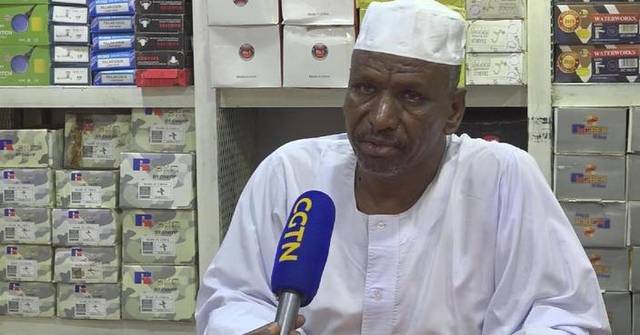
The Al-Sajana market in Khartoum, capital city of Sudan is considered one of the first markets to resume operations, despite life remaining at a standstill in a number of other markets due to destruction.
The market, which specializes in selling building materials and electrical supplies, is suffering from stagnation due to the sharp rise in prices, particularly after the war in the Gulf, which has disrupted import movements—especially from China, the largest source country for Sudanese importers.
Commercial activity appears normal at the Al-Sajana building materials market in Khartoum, but the high prices and scarcity of some goods have created a state of recession, as most of the city’s residents have lost their sources of income due to the war.
“Market prices are extremely high. The ordinary citizen cannot afford to buy his necessities from the market,” said a local resident named Baha al-Din al-Tahir.
“Prices have increased. They are costly. The increase for every item is close to double its price,” said Mohamed Bakhit, another resident.
For their part, traders and importers said that the war in the Gulf region has completely disrupted trade calculations, as the Sudanese market relies primarily on Chinese imports. The most prominent Chinese exports to Sudan include machinery of various types, electrical equipment, vehicles, iron and steel, in addition to tires.
“The biggest problem is the closure of the Strait of Hormuz, which has caused a shortage in the flow of goods. Many goods are not available to us, and even when they are available, their prices are high, because if we want to import, it now takes longer with higher costs,” said Abdullah Malah, an importer of electrical tools.
The rehabilitation of what the war destroyed in Sudan, particularly housing, depends on price relief in the markets and the normal flow of goods.
According to official data, the total bilateral trade volume between China and Sudan reached approximately 1.39 billion U.S. dollars in 2024.
The real estate sector in Sudan is considered the most affected by the rising prices of building materials and electrical tools due to what is happening in the Gulf region.
Concerns about Gulf developments affecting Sudan’s building materials markets
A senior South Sudanese official called for reform to the international system that still has considerable room for improvement when it comes to equality, fairness, and inclusiveness.
Speaking at the 2026 Forum on Global Human Rights Governance on Friday, Agnes Oswaha, Undersecretary of Ministry of Foreign Affairs and International Cooperation of South Sudan, said that inequalities remain a grim reality today and Global South countries bear the brunt of an unevenly structured global system.
“Inequalities within and among nations remain a grim reality that is yet to be addressed. Countries of the Global South are faced with sanctions, the burden of foreign debts, manipulation by external actors, among others,” said Oswaha.
Oswaha denounced the lack of representation for developing countries on the world stage. She said that within the Global South, only China holds a permanent seat on the United Nations Security Council, despite the fact that the vast majority of issues on the council’s agenda directly affect developing nations.
The diplomat also criticized international financial institutions, such as the World Bank and the International Monetary Funds, saying their assistance often come strings attached. She said that these institutions tend to impose excessive and impractical conditions and prescribe policies without considering a country’s economic priorities.
Oswaha argued that today’s most pressing crises cannot be solved through isolated or unilateral means, and urged a wholesale modernization of global bodies.
“The challenges and opportunities of our time, from catastrophic climate change and pandemics, security and conflicts, are global concerns rather than national issues. For us to overcome and progress, we must address them collectively and effectively. We must reform our multilateral institutions, reform them in such a way that can promote the principles of sovereignty, equality, collective action and impartial adherence to international law,” said Oswaha.
She praised China for championing a cause that will reduce gaps and tensions within and among nations, setting the foundation for a world where progress approaches collectively and is achieved fairly.
Oswaha called on the United Nations to overhaul its approach to global crises to better serve the interests of the developing world.
“The United Nations must adapt an approach to the current challenges that is inclusive, holistic, people-centered and action-oriented in order to carry forward the developmental aspirations of all people within the Global South and the world at large. Therefore, South Sudan urges for solidarity, peaceful coexistence, religious tolerance through collective and coordinated action in order to benefit all people,” said Oswaha.
The two-day forum, which opened on Thursday, marks the 40th anniversary of the adoption of the UN Declaration on the Right to Development. It focuses on advancing human rights through development and will foster discussions on global human rights governance issues. Over 400 participants from over 100 countries and international organizations, including the United Nations (UN) were in attendance.
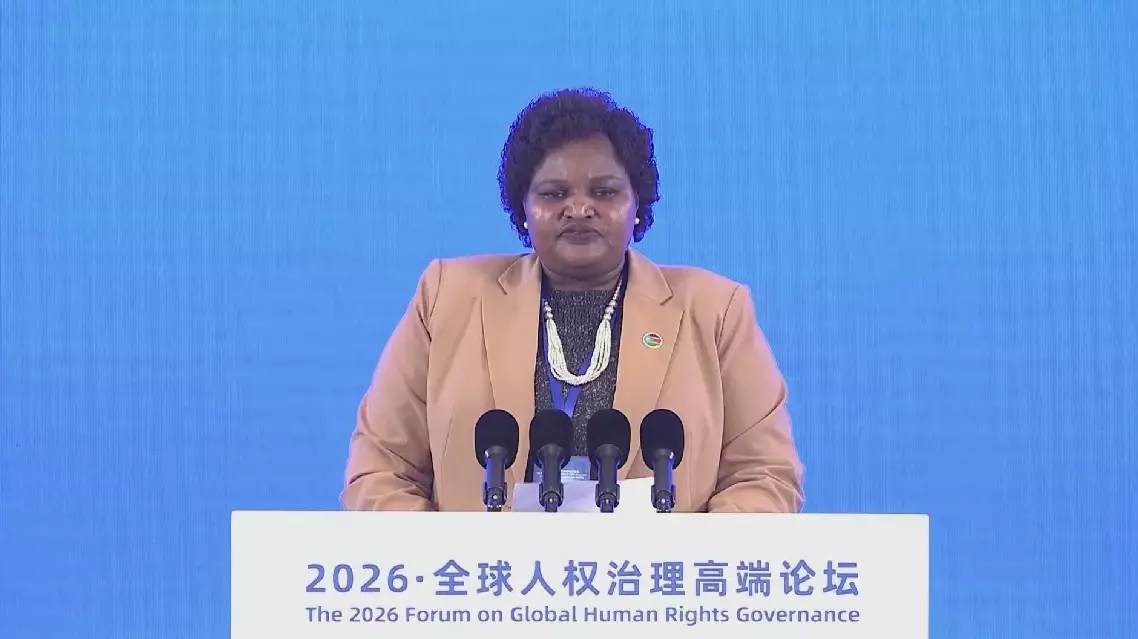
South Sudan diplomat calls for reform to unjust international system
Credit: Source link