

American midterms will fuel polarization – GIS Reports
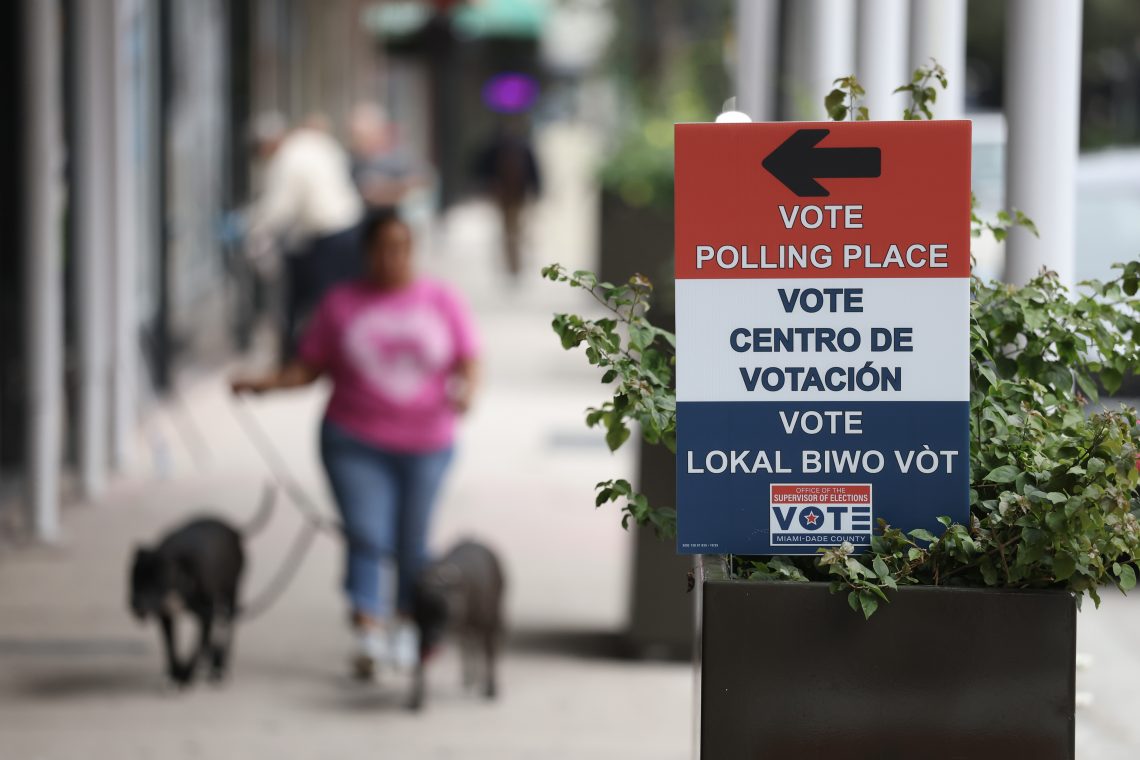
The 2026 elections may intensify political divisions but will fall short of delivering major policy or governance changes nationwide.
In a nutshell
- Change in congressional control may constrain the president
- Competitive races in swing states will attract attention and resources
- Narrow majorities and polarization make legislative breakthroughs unlikely
- For comprehensive insights, tune into our AI-powered podcast here
National elections in the United States have a global impact, but primarily in years when voters will also be choosing the president. That has been an inescapable geopolitical reality for almost a century, and it is unlikely to change anytime soon. In November, Americans face another national election and the country is set for an increasingly sharpening divide between left and right afterward.
This year’s upcoming vote, however, is not for the presidency, but primarily for congressional seats. It is referred to as the “midterms” because they come at the midpoint of a presidential four-year term. In the U.S. House of Representatives, members’ terms are for two years. Thus, in every national election, always even years, each seat in that chamber is up for grabs. Senators, in contrast, have six-year terms, and one-third of those seats are contested every two years: 33 of the 100 Senate seats will be contested in the 2026 midterm vote. There will also be gubernatorial elections in 36 of the 50 U.S. states.
Despite the intense political competition expected in the campaign, the outcome of 2026 national elections will likely not significantly shift national policies or the direction of American foreign policy.
The power to decide
The most consequential impact in the November elections will be which national party controls the U.S. Congress. The party that holds the majority of the seats in the House of Representatives and the Senate holds the preponderance of legislative power in the respective chambers, including control of the chairmanship of committees, the legislative agenda, the majority of staff and procedural rules.
Currently, the Republican Party has slim majorities in both houses as well as the presidency. If the Democratic Party can achieve a majority in one or both houses, it would not only undermine the president’s ability to set the legislative agenda, but it would put all the powers of the House or Senate in the hands of the president’s political opposition.
There are two primary reasons why control of either or both houses might shift to the political opposition. First, it is historically common in the U.S. for the incumbent president’s party to lose control of congressional majorities in midterm elections. This has happened in more than 20 midterm elections going back to the 1930s. Second, the margins of the majority in both houses are very small, so a small swing in numbers could shift control of either house.
Facts & figures
Composition of the U.S. House of Representatives

© GIS
Betting the odds
The likelihood of dramatic shifts in the representation of the two parties is growing smaller. Americans are more politically divided now than in decades, and the number of swing states remains stagnant, if not declining. As a result of state apportionment of congressional seats, house elections that are truly competitive – where districts have an even number of Republican and Democratic voters or a high proportion of independent voters – are increasingly few. So, while there will be many elections nationwide, only a few races are likely to matter in determining which party controls Congress.
These races, including in Arizona, Georgia, Michigan, Nevada, Pennsylvania and Wisconsin, will be hotly contested and receive enormous amounts of attention and money. The races may well focus on local issues and the character and competence of the candidates, rather than reflect choices over the national policies and priorities of the parties.

Not only is this a neck-and-neck race from the start, typically, American voters do not focus on their choice at the ballot box until after the end of the summer break. For example, many consider the state of the economy to be voters’ most important issue. Yet even now in the spring of an election year, concerns about consumer prices and economic conditions may have much less impact than the hot-button issues being discussed closer to the elections.
Polls are also notoriously poor predictors. In the 2022 midterms, surveys suggested Republicans would make massive gains. They did not. And they proved a poor predictor for the next national elections, in which the Republicans handily won the presidency and secured majorities in both houses of Congress.
Absent dramatic political reversals, scandals or crisis between now and October, it is unwise to be confident of the results of the midterms until after they are announced.
A distinction without a difference
Arguably, as in many previous presidential administrations, the loss of dominance in Congress halfway through the presidency may not significantly affect the president’s national agenda. U.S. President Donald Trump pushed through his top legislative priorities early in his term, as did previous presidents of both parties. In this case, President Trump had his “Big Beautiful Bill.” Presidents are therefore less dependent on congressional initiatives in the second half of their presidency.
Even if the Republicans retain one or both houses, they will likely again have only slim majorities. In such a case, it will be difficult to proceed with major initiatives, since the passage of most bills in the Senate still requires a 60-vote majority.
If Republicans lose the House of Representatives, the Democrats may seek to impeach the president (as they did twice before), though with little chance of success as they would not have the votes in the Senate to remove him from office. The Democrats will undoubtedly conduct several investigations to try to undermine and frustrate the administration. These actions will sharpen the political divide in the U.S., but it is not clear if either party will benefit from this divisiveness.
Read more by foreign affairs expert James Jay Carafano
Meanwhile, almost assuredly the Democrats will not have the votes to overcome a presidential veto of any legislation they may introduce. Americans are also becoming increasingly frustrated with government shutdowns – so control of the budgeting process may not result in dramatic leverage over the White House. Additionally, the composition of the Supreme Court will not change significantly in the foreseeable future as justices are appointed for life. They are very selective on the timing of moving into their retirements, should they choose to step back from public life. If there are vacancies, President Trump will not nominate anyone acceptable to Democrats. And as conservatives have six seats in the nine-justice court, any individual vacancies would not materially influence the balance of the court.
At the same time, presidents have significant independent authority over the executive branch, military operations and foreign policy. Foreign and national policy may not be greatly affected if Congress is dominated by the left.
Scenarios
Most likely: Further political division and polarization
The most likely scenario is that the two years following the midterm elections will see an increasingly sharpening divide between left and right – each offering distinctly different visions for the future. As a result, it will be the 2028 vote, not this year’s, that will no doubt be deeply consequential in determining the future course of U.S. policy.
Likely: A thin congressional majority and no major legislation will pass
If the Democrats take control of one or more houses of Congress, their agenda will be mostly focused on setting conditions for national elections rather than successfully driving major shifts in policy and governance. If Republicans hold the majority, likely the margins will still be narrow, and delivering big legislative wins for the president will be difficult.
Contact us today for tailored geopolitical insights and industry-specific advisory services.

Sign up for our newsletter
Receive insights from our experts every week in your inbox.