

South Sudan sold US$731mn of oil despite debt arrears
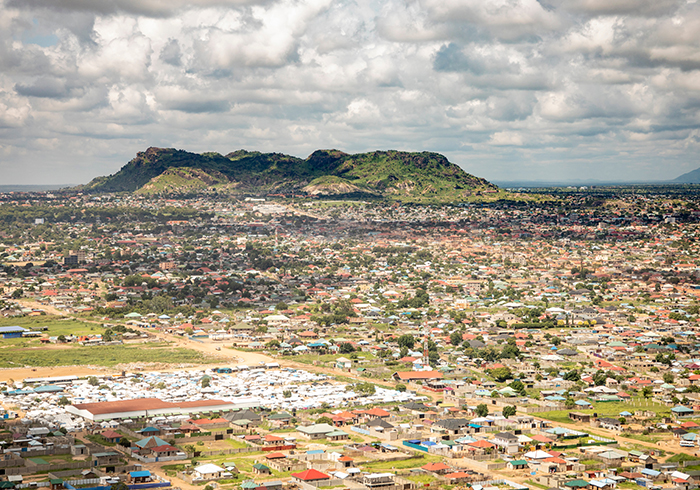
The government of South Sudan delivered more than US$731mn-worth of oil cargoes under new pre-payment deals in the first 10 months of last year, despite previously promising to use the crude to repay existing oil-backed loans, a UN report has shown.
Authorities sold 22 cargoes of Dar and Nile blend crude between January and October 2025 and received short-term advance payments of between US$25mn and US$30mn for each, according to a report by the UN Panel of Experts on South Sudan, seen by GTR and due to be published this week.
South Sudan’s government receives a small portion of the oil produced by the country’s privately-owned fields, which are a key source of state revenue.
Since achieving independence in 2011, the government has taken out a series of large loans to be repaid with cargoes of oil. But in almost all cases it has failed to service or repay the debts, according to court documents and previous UN reports.
Lenders including QNB, the African Export-Import Bank and UAE company Nasdec General Trading were owed some US$2.3bn under such arrangements as of mid-2025, GTR has reported.
Despite the outstanding debts, the new UN report shows South Sudan has continued to sell its allocation of oil at a steady pace.
The primary buyer during 2025 was Dubai-headquartered trader Euro-American Energy, which pre-paid and received 12 cargoes. Fellow Dubai traders BGN and Chiangwei, as well as Singapore-headquartered EPDESA, also took delivery of between two and five cargoes each, according to the bi-annual UN report.
The report’s findings suggest those traders may be affected by an English court injunction issued earlier in May, blocking any further pre-payment deals until South Sudan meets obligations owed to commodity trader BB Energy, pending a further June 5 court hearing.
BB Energy previously told a court it made a US$100mn pre-payment to South Sudan in early 2025 for five cargoes to be delivered throughout the year, but has only secured one cargo since then.
This week, three energy traders, including BGN, are fighting BB Energy’s attempts to get another court injunction over three cargoes due to be lifted in coming weeks. A judgment in that case is slated for May 29.
Payment concerns
The UN Panel of Experts also highlighted instances where firms making pre-payments are required to pay fees to a private company, as well as some cases in which payments for government cargoes have been transferred to third parties instead of into state coffers.
The pre-payments made by traders are usually at a significant discount to the market value of cargoes, the report says, citing government documents and interviews with market participants. But once the price of a cargo has been determined by public auction, the trader generally pays the government of South Sudan the difference.
Part of the discounts negotiated by traders account for fees levied by the government. Since 2023, South Sudan has required a payment of 0.3% of a cargo’s value as part of its e-Crude Accreditation Permit scheme.
A UN Human Rights Council report published in September 2025 said that 75% of that payment is allocated to Crawford Capital Ltd, a South Sudanese e-services company that has been contracted by the government to administer the e-Crude accreditations, with just 25% going to the state.
The council’s researchers said the firm’s “ownership composition is connected to seniormost political elites in South Sudan” and it “has emerged as a central player in a range of corruption schemes and diversion mechanisms involving non-oil revenue collections”.
In a May statement on visa restrictions against members of the South Sudanese government, the US Treasury said “numerous well-respected investigative bodies have documented how corrupt officials and entities, including Crawford Capital, Ltd., have siphoned money from South Sudan’s treasury and stolen foreign assistance funds intended to support the South Sudanese people”.
Crawford Capital did not respond to a request for comment. Following the US announcement, a South Sudan government minister said its relationship with the company follows “established institutional procedures” and said the firm provides “professional engagement and technical contribution” toward advancing South Sudan’s digital transformation objectives, according to the Sudans Post.
Some buyers of South Sudanese oil have also made payments for cargoes to third parties, instead of the government’s official revenue account at First Abu Dhabi Bank, the Panel found.
“The Panel has identified… several cases in which payments have been made directly to third parties, bypassing government accounts,” the authors said. “At least one advance payment worth around $30 million was, for example, paid directly to the account of a company named ‘Al Wafra Najam Goods Wholesalers’, registered in the United Arab Emirates.”
South Sudan’s petroleum ministry did not respond to a request for comment.
The sparring by oil traders over cargoes comes amid turbulence at the top of South Sudan’s government, with President Salva Kiir appointing and then firing three finance ministers since November. Petroleum minister Puot Kang Chol was arrested in March 2025 and is currently on trial along with several other senior political figures.
The country is one of the world’s most impoverished, with around two thirds of the population requiring humanitarian assistance. A protracted civil war has displaced millions of people.
Euro-American, BGN, EPDESA and Chiangwei did not respond to questions about the report’s findings.
Credit: Source link