

Jihadist pressure continues in the Sahel: trucks carrying supplies to Mali as part of Morocco’s Atlantic initiative are destroyed
- Attack on Moroccan lorries
- Bamako, a jihadist target
- Burkina Faso, another hotspot
- Capitalising on discontent
- Morocco, the shield
Armed jihadist groups controlling several countries in the African Sahel region have fulfilled their promise to disrupt the logistics flows attempting to supply food to Mali’s capital, Bamako, thereby exacerbating the crisis in the Sahel countries.
Attack on Moroccan lorries
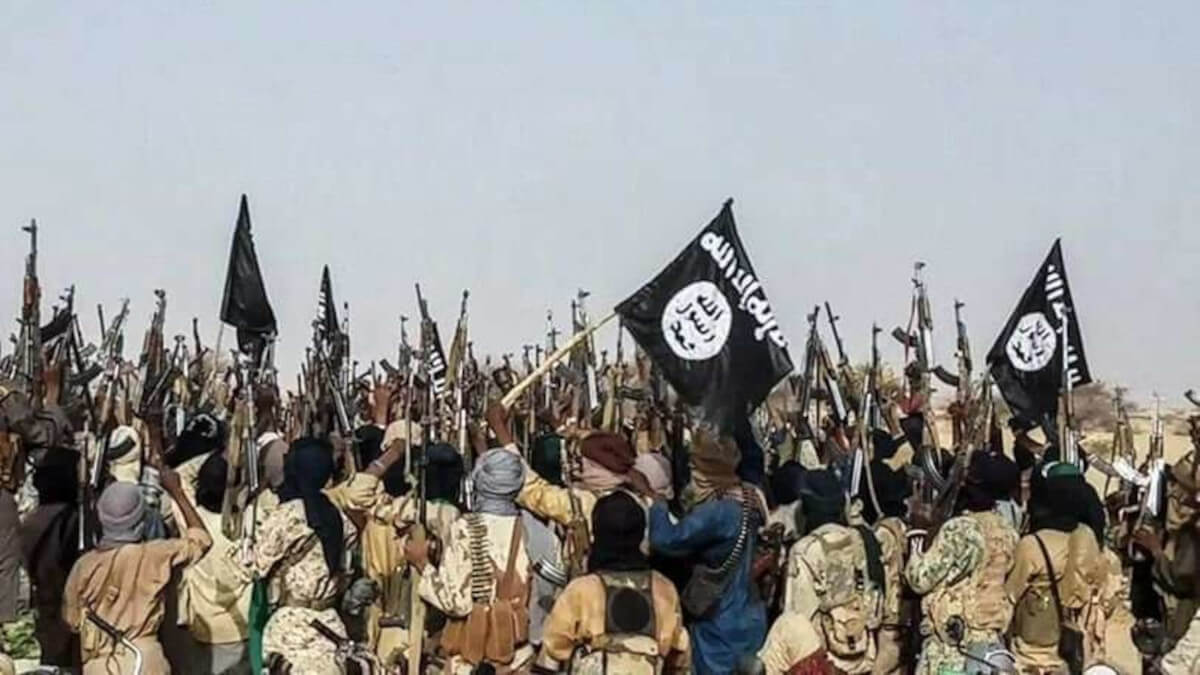
The latest reports suggest that last Wednesday, 6 May, armed members of the so-called Katiba Macina (Macina Liberation Movement), linked to the Group for the Support of Islam and Muslims (JNIM), intercepted a convoy of Moroccan lorries heading for Bamako and set them alight, without the drivers sustaining any injuries.
According to the Moroccan media outlet Le360, the attack affected six lorries that had left Morocco bound for the capital of Mali, and which were attacked on the road linking Gogui Zammal, on the border with Mauritania, with the village of Gogui in Mali, an area of terrorist operations
These lorries were part of a supply convoy travelling from various Maghreb countries to Bamako, the capital of Mali, a country that relies on imports from the Maghreb and West Africa.
The operation is part of a strategy by jihadists linked to al-Qaeda, who seek to restrict or cut off supplies to the capital from countries such as Morocco, Mauritania and Senegal.
This is not the first incident of this nature to affect Moroccan lorries. In January 2025, a convoy from Morocco was attacked near the border with Mali and four Moroccan drivers were kidnapped in an area known as “the three borders”, where Mali, Niger and Burkina Faso meet.
This latest incident forms part of a series of attacks targeting transporters in the Sahel region. In January 2025, several Moroccan lorries were attacked in the Nioro du Sahel region, near the border with Mali. During the same period, four Moroccan drivers were kidnapped in the area known as the “three borders” between Niger and Burkina Faso.
Bamako, a jihadist target
The attack on the Moroccan lorries comes two weeks after a number of jihadist offensives were recorded in Bamako, Kati and several towns in northern Mali.
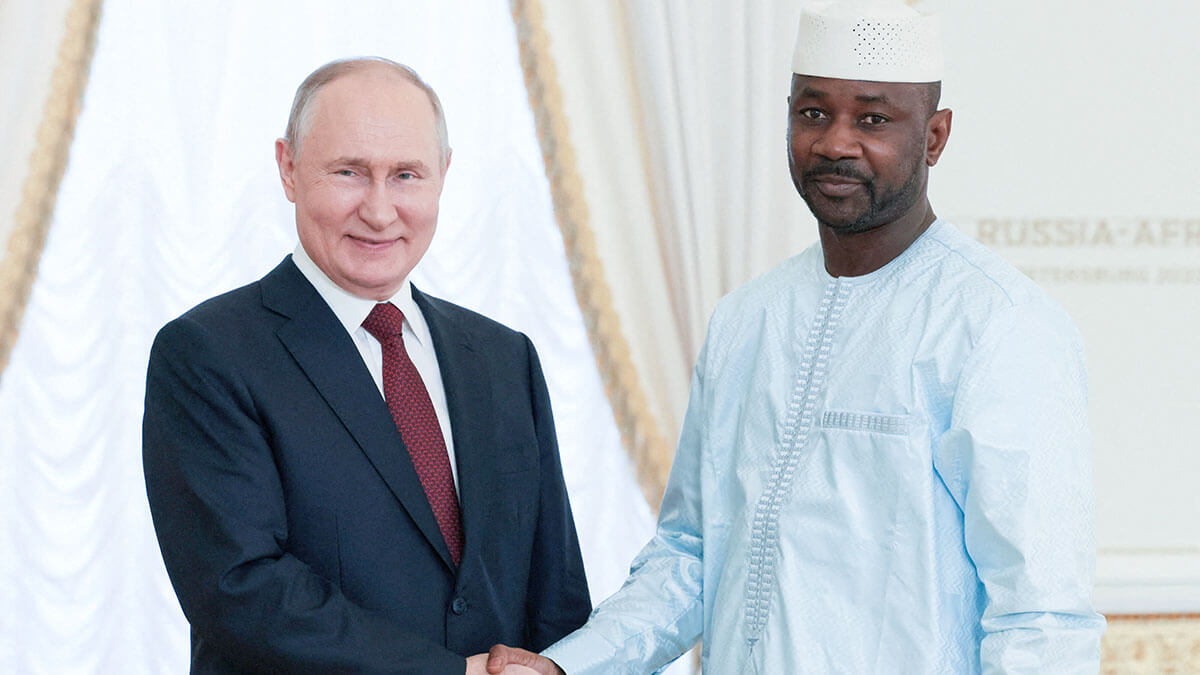
On 25 April, the Group for the Support of Islam and Muslims (JNIM), alongside Tuareg separatist rebels from the National Movement for the Liberation of Azawad (FLA), carried out an offensive in Mali, targeting the junta leader and transitional president, Assimi Goita, and the defence minister, Sadio Camara, with two car bombs.

The attacks claimed the life of Camara, whose duties as defence minister have been taken over by President Goita. The offensive was repelled by the Malian armed forces, with the assistance of mercenaries from the Africa Corps (formerly the Wagner Group), who are integrated into the Ministry of Defence.
According to President Goita, who heads the military junta established in the country following the coups d’état of August 2020 and May 2021, which he himself led, hundreds of terrorists have been neutralised and they have been prevented from closing in on Bamako, although he acknowledged that the jihadists were reorganising. The latest attacks on lorries coming from Morocco are proof of this.
Burkina Faso, another hotspot
The instability in the Sahel countries has several simultaneous flashpoints. Another of these is in Burkina Faso, a country also led by a military junta headed by Ibrahim Traoré since 2012. There, attacks have been occurring over the past few weeks.
At the end of last April, 11 civilians who were part of the volunteer militias supporting the Burkinabe army were killed in a jihadist attack that took place in the northern town of Bagare. Responsibility for the attack was subsequently claimed by the so-called Group for the Support of Islam and Muslims (JNIM), a terrorist organisation linked to al-Qaeda.
A week earlier, 25 soldiers and paramilitaries from Burkina Faso were killed in an attack also carried out by JNIM in Bagmoussa, some 40 kilometres from the capital, Ouagadougou.

Capitalising on discontent
Jihadist forces have managed to capitalise on the discontent among young people in local communities in Mali, Burkina Faso and Niger, who are fed up with the abuses committed by the armies of the three countries and auxiliary forces such as the Russian mercenaries of the Africa Corps.
According to a recent report by the International Crisis Group on the Sahel, JNIM has the support of the group led by Iyad ag Ghali, a former Tuareg fighter, which controls areas in the north, centre, south and west of Mali, the north, west and east of Burkina Faso, and the south-west of Niger.
The terrorists’ objective extends beyond the Sahel region itself, which is their current centre of operations. The aim is to proclaim a new Caliphate and spread across North African countries such as Mauritania, Libya, Tunisia and Morocco, before subsequently making the leap to Europe.
Morocco, the shield
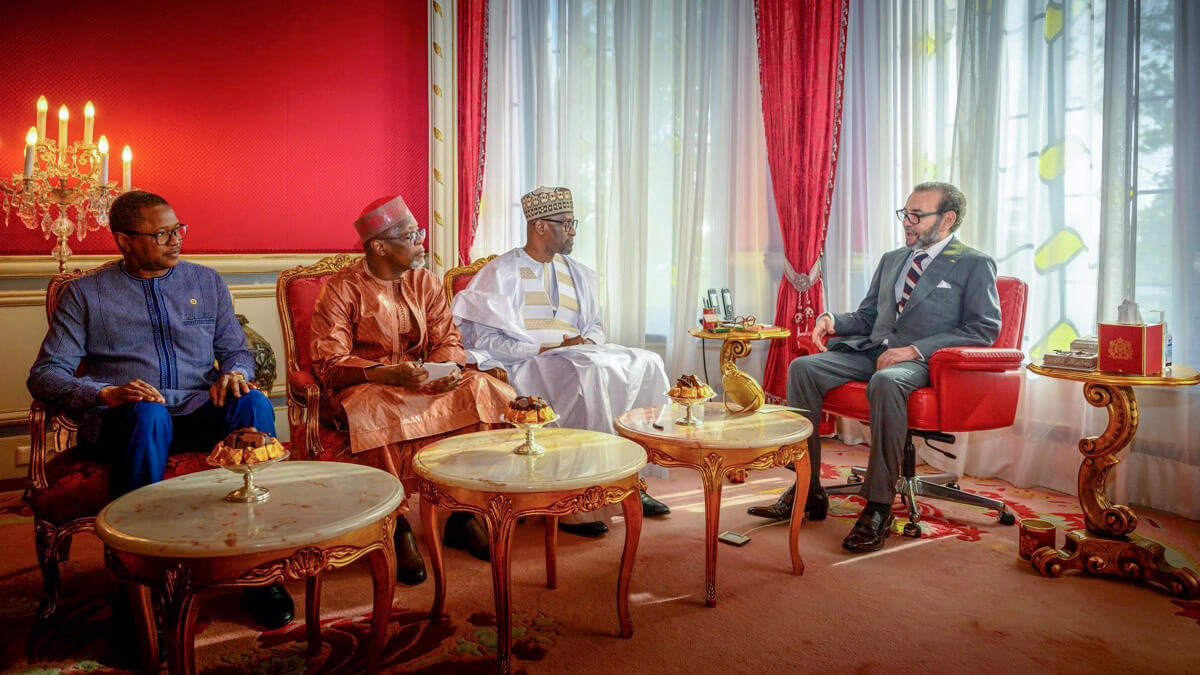
In this power struggle in the Sahel region, and given the inaction of European countries in the face of the Russian-backed jihadist offensive, the role Morocco is playing at a regional level is fundamental in acting as a containment shield against terrorists’ expansion plans.
A strategy centred on the so-called Atlantic Initiative for the Sahel countries, promoted by King Mohammed VI, which consists of providing a logistics corridor to give the Sahel countries access to the sea via the ports on Morocco’s Atlantic coast (Tangier Med and, soon, Dakhla Atlantic).
This strategy aims to enable countries such as Mali, Burkina Faso and Niger to develop their economies, create jobs, strengthen their institutions and put an end to the discontent that drives their young people into the arms of jihadists, thereby preventing them from becoming fertile ground for interference by powers such as Russia.
An initiative that is now being targeted by jihadists, who are attacking the lorries in which Morocco sends supplies to the landlocked countries, and which would require the collaboration of all Maghreb countries, including Algeria, to act as a containment barrier and prevent the JNIM epidemic from reaching North Africa and, subsequently, Europe.
Credit: Source link