
👨🏿🚀TechCabal Daily – ‘Starlink, you’ve been served’


Good morning 
Cape Town has a date with AI this Friday, and TechCabal’s publisher is taking the stage.
On November 20, OpenAI Academy, Andela, and Innovation City are bringing the Codex Champions Showcase to Cape Town, South Africa, with a focus on how Africans can use AI to tell their own stories.
Tomiwa Aladekomo, chief executive of Big Cabal Media, TechCabal’s parent company, will join Jessica Hope, founder of communications agency Wimbart, for a conversation about storytelling in the age of AI.
And it won’t be all talk. Five finalists from Andela’s talent network will demonstrate tools they’ve built with OpenAI’s Codex to help African creators tell better stories, reach bigger audiences, and bring their ideas to life. The showcase has already made stops in Nairobi and Lagos. Cape Town gets its turn this Friday, from 4 p.m. to 8 p.m. SAST.
If you’re in town, register here. Come for the ideas, stay for the demos, and say hello to Tomiwa.
Now, on to today’s stories.
—Emmanuel
TC Mzansi, our newsletter covering South African tech is coming on November 23.
Be the first to know when it launches

- Starlink ordered to cease operations in SA
- MTN, Telkom revive acquisition talks
- NGX acquires 10% stake in Kenyan bourse
- Payaza goes to Kenya
- World Wide Web 3
- Job Openings
Internet
Starlink issued notice to cease unauthorised operations in South Africa

Starlink has spent three years finding its way into South African homes without officially launching there. The country’s telecoms regulator has finally sent it a message: No licence, no Internet party.
On October 14, South Africa’s Independent Communications Authority (ICASA), the country’s telecoms regulator, issued a formal notice of non-compliance to SpaceX, Elon Musk’s aerospace company, ordering it to stop providing unauthorised Starlink services in the country.
Communications Minister Solly Malatsi disclosed the order in a parliamentary response. Starlink isn’t licenced in South Africa, but some residents haven’t stopped using it.
Explain like I’m new here: Since 2023, South Africans, particularly those in poorly connected rural areas, have used Starlink’s international roaming service to get online. The trick was to buy a Starlink dish, register it in a neighbouring country like Lesotho, and use it back home—no South African licence required.
Starlink recently tried closing that loophole. It tightened roaming restrictions, cutting the permitted stay from 60 days to 30 days, then to just seven days for users in South Africa. In October, the company introduced stricter identity and country-of-origin checks to stop customers from registering their kits abroad and using them indefinitely in South Africa.
Some users had already found creative workarounds, from temporarily switching their kits off to crossing the border to reset their roaming clocks. ICASA wasn’t amused.
Here’s the bigger problem: South Africa’s telecoms licencing rules require at least 30% ownership by historically disadvantaged groups. The government has proposed allowing qualifying investments in local businesses and skills development as an alternative, but the regulatory framework remains contested.
Zoom out: This is about more than a few satellite dishes. Starlink offers a way to reach communities that traditional broadband networks struggle to serve. South Africa also has a legitimate interest in ensuring telecoms providers follow its licencing rules.
ICASA’s investigation is ongoing, and it has yet to determine any penalties. South Africa wants Starlink to use the front door. The country is still arguing over what the key should look like.


Upgrade your business today
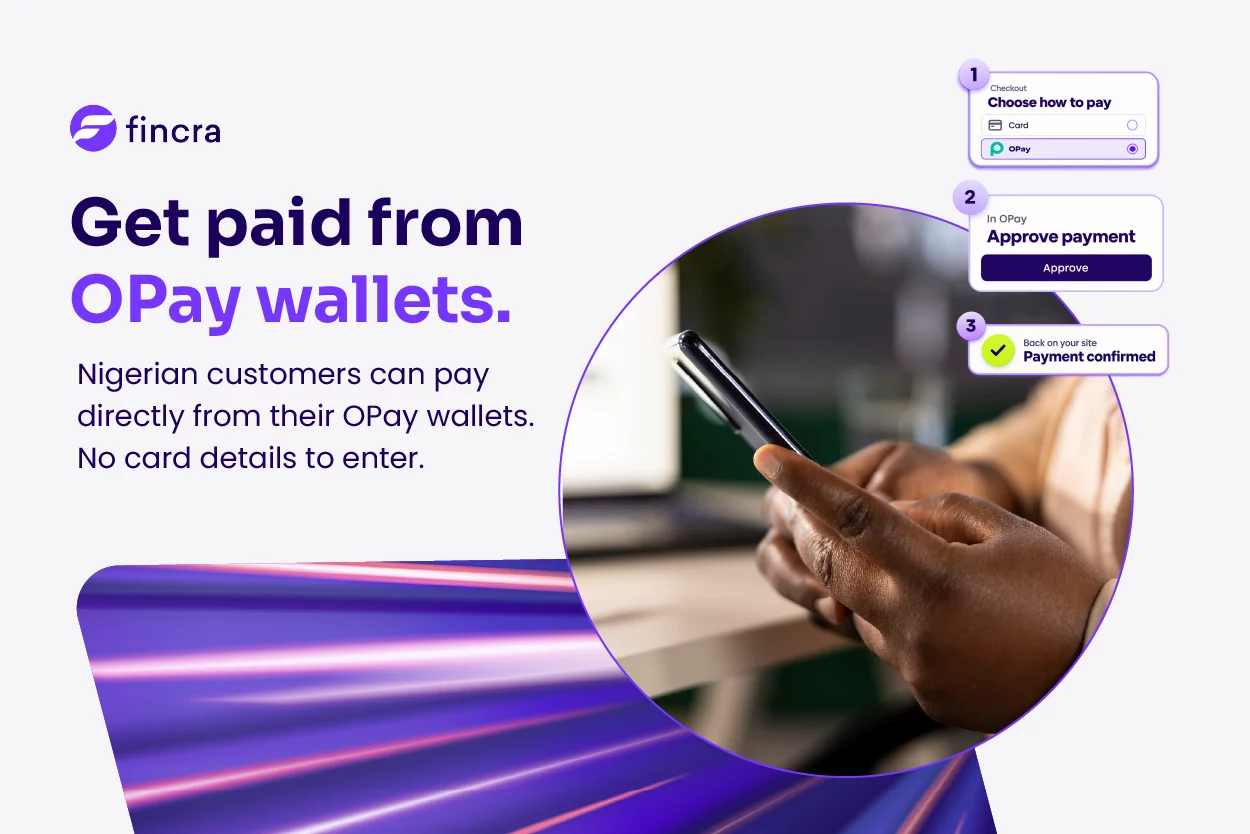
Pay with OPay is live on Fincra. Customers approve payments straight from their OPay wallet, and you get confirmation back on your site. Available now for NGN collections! Upgrade your business today with Fincra pay with OPay.
Telecoms
MTN revives bid to take over Telkom

MTN seems to have developed a taste for big infrastructure deals. In February, the telco giant agreed to buy the remaining 75.3% of IHS Towers—one of Africa’s largest independent tower companies—that it did not already own. Now it is back knocking on Telkom’s door.
What happened? MTN Group is back in talks to acquire rival Telkom, a South African telecoms group, four years after an earlier attempt fell apart. The discussions are early, but MTN is considering a cash offer, and Telkom shareholders could potentially take MTN shares instead.
Explain like I’m new here: In 2022, the two companies held takeover discussions, but MTN wanted Telkom to consider its proposal without negotiating competing offers. Rain, another South African telecoms operator, had expressed interest in Telkom at the time. MTN eventually walked away.
Competition regulators will be circling: Combining two major mobile operators could give the merged business considerable influence over prices, infrastructure and access to customers. Regulators would want to know whether the benefits of combining networks outweigh the risk of reducing competition. In 2024, the Competition Tribunal blocked Vodacom’s proposed 30% investment in Maziv, the company housing fibre operators Vumatel and Dark Fibre Africa, for similar reasons. After a series of appeals, it secured approval in August 2025. That likely gave MTN some reason to believe consolidation is possible.
What it could mean: MTN reported 39.49 million South African subscribers in June, while Telkom had 25.67 million mobile subscribers in March. Together, that is about 65.2 million subscribers. Hurdles remain as the South African government owns 40.5% of Telkom, while the Public Investment Corporation (PIC), the state’s investment arm, holds another 11.08%. No deal has been agreed, and the companies say there is no certainty one will happen.
Capital Markets
NGX buys a piece of Kenya’s stock market

The NGX Group, the parent company of the Nigerian Exchange (NGX) and other market infrastructure businesses, has bought a 10% equity stake in the Nairobi Securities Exchange (NSE), the institution that operates Kenya’s main stock market.
Explain like I’m new here: In 2024, NGX Group invested in the Ethiopian Securities Exchange (ESX), the country’s first-ever bourse in decades. NGX became a 10% shareholder and secured a seat on its board. ESX launched in January 2025, and it still has a long way to go before becoming a busy cross-border investment corridor.
NGX is not alone in this strategy, as exchange operators are looking beyond their home markets for investment returns and opportunities to build regional relationships. In 2021, the NSE acquired an additional 4% stake in Tanzania’s Dar es Salaam Stock Exchange.
What could this unlock? A Nigerian investor buying shares in a Kenyan company may face different brokers, regulations, settlement arrangements, and currency-conversion requirements. NGX’s investment could help connect these markets. The Dangote Refinery share sale, which allowed regional investors to participate through local market operators, offers a glimpse of what cross-border access can look like. Companies could eventually reach investors in more than one market.
Yet, owning 10% of the Kenyan bourse does not automatically create a shared trading platform or remove the regulatory and currency hurdles between the two markets.
Fintech
Payaza secures Kenyan licence

Payaza has been collecting something more useful than passport stamps: regulators’ signatures.
Just 17 days after securing approval in Zambia, the Nigerian-founded payments company has landed another one in Kenya. In an email on Monday, Payaza announced to merchants in two words in Swahili: Ni rasmi! It’s official!
The Central Bank of Kenya (CBK) granted the company a payment service provider licence on November 5, allowing it to process online payments for Kenyan businesses.
Explain like I’m new here: Payaza provides the infrastructure that helps businesses accept payments from customers. It says it operates in more than 27 countries worldwide, including Nigeria, Ghana, Uganda, Tanzania, and South Africa.
Its latest approval lets Kenyan merchants use Payaza to accept card payments, mobile money, and bank transfers. The company also plans to support merchant settlements and cross-border collections.
Between the lines: Payaza isn’t getting permission to become another M-PESA. Its licence covers payment gateway services, not customer wallets or deposit-taking. The Kenyan approval follows an October 19 authorisation from the Bank of Zambia, which designated Payaza as a payment system operator.
Zoom out: Kenya is hardly short of ways to pay. But collecting money from customers across different African markets remains complicated by local banking systems, currencies and regulations.
Payaza is betting that businesses would rather use one payments provider than piece together a different solution in every country.
Two licences in 17 days is impressive paperwork. Getting merchants to use those payment rails is where the real business begins.
CRYPTO TRACKER
The World Wide Web3
Source:

|
Coin Name |
Current Value |
Day |
Month |
|---|---|---|---|
 Bitcoin |
$64,795 |
+ 0.01% |
– 20.43% |
| Ether |
$1,821 |
+ 0.73% |
– 24.92% |
| Aster |
$0.5461 |
+ 4.64% |
– 22.40% |
| Solana |
$71.67 |
– 0.91% |
– 35.94% |
* Data as of 06.30 AM WAT, November 17, 2026.
JOB OPENINGS
- Sparkle Nigeria — Business Growth Manager — Lagos, Nigeria
- Tech Safari — Content Lead — Nairobi, Kenya, and Abuja, Nigeria (remote, anywhere in Africa)
- CredPal — Credit Underwriter — Lagos, Nigeria
- Pesa — Social & Influencer Marketing Manager — Remote (Nigeria)
- Bamboo — Product Manager (Misan) — Hybrid (Lagos, Nigeria)
- Àngeles Sostenibles — Operations Associate — Abuja, Nigeria
- Coinomad — Sales Manager, Business Development Manager — Nigeria
- Sumsub — Senior Anti-Fraud Analyst — Remote (anywhere)
- AfriChange — Compliance Specialist — Remote (Nigeria)
- Scouthappy — Growth Lead for Fintech (Stocks) — Remote (Nigeria)
- Daya — Growth Product Manager (Daya Coins) — Remote (Nigeria)
- Qore — Site Reliability Engineering (SRE) Manager — Lagos, Nigeria
- Afreximbank — Student and Postgraduate Internship — Cairo, Egypt
Looking for more opportunities? There are additional openings on TechCabal’s job board. We’ve also cleared out outdated listings to keep opportunities fresh for job seekers. If you’re hiring and would like to feature an open role, please submit it via this form.

- With 6% of its target trained, Nigeria earmarks $3 million to fix 3MTT’s job problem
- The cost of making stablecoins work in Nigeria
-
African investors are building exits and finding money in new places
Written by: Yemi Kareem and Emmanuel Nwosu
Edited by: Emmanuel Nwosu & Ganiu Oloruntade
Want more of TechCabal?
Sign up for our insightful newsletters on the business and economy of tech in Africa.
- The Next Wave: futuristic analysis of the business of tech in Africa.
- Francophone Weekly by TechCabal: insider insights and analysis of Francophone’s tech ecosystem
P:S If you’re often missing TC Daily in your inbox, check your Promotions folder and move any edition of TC Daily from “Promotions” to your “Main” or “Primary” folder and TC Daily will always come to you.

Crédito: Link de origem